





What's Happening?
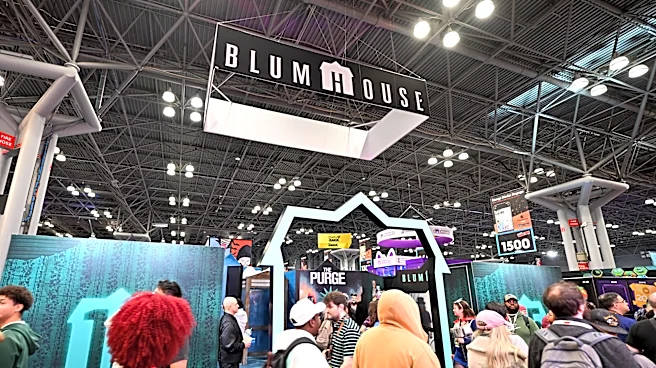
Producers Jason Blum and James Wan have officially announced the merger of their respective production companies, Blumhouse Productions and Atomic Monster, under the new unified entity named 'Blumhouse Atomic'. This announcement follows months of complex
administrative negotiations to combine the two companies into a single production and distribution umbrella, with Universal Pictures leading the joint distribution efforts. The new entity aims to integrate production lines and specialized technical staff to deliver a broad range of psychological horror and dark fantasy films. This strategic move coincides with unprecedented financial success in the global cinema industry, particularly within the horror genre. Financial reports indicate that films released under both companies this year are projected to achieve nearly $2.5 billion in global box office revenue by year-end. This surge is attributed to the success of contemporary films like 'M3GAN 2.0' and 'The Black Phone 2', demonstrating a significant youth audience engagement and full attendance in luxury cinemas. The merger positions Blumhouse Atomic as a dominant production force in Hollywood, leveraging Blum's reputation for high-profit, low-budget productions and Wan's expertise in building expansive horror universes like 'The Conjuring' and 'Insidious' series.
Why It's Important?
The formation of Blumhouse Atomic signifies a major consolidation within the U.S. film industry, particularly in the horror genre, which has proven to be a highly lucrative segment. This merger combines the distinct strengths of two of the most successful horror producers: Jason Blum's model of cost-effective, high-return productions and James Wan's ability to create expansive, commercially successful horror franchises. The unified entity is poised to dominate the horror market, potentially setting new benchmarks for production efficiency and box office performance. The reported $2.5 billion in global box office revenue underscores the significant economic power of the horror genre and its growing appeal to diverse audiences, especially younger demographics. This success could influence future investment strategies across Hollywood, encouraging more studios to invest in horror films and similar genre-specific content. Furthermore, the collaboration with Universal Pictures for distribution strengthens the new company's market reach and ability to compete with larger studios, potentially leading to a shift in the competitive landscape of film production and distribution.
What's Next?
Blumhouse Atomic is set to implement an expanded production roadmap for 2027, with its California studios actively developing innovative cinematic and television projects. This includes the revival of classic horror films with modern visual interpretations and an expansion into digital video game production based on their popular film stories, in collaboration with advanced technology departments. Jason Blum has stated that the new entity aims not only to increase financial returns but also to foster a safe and bold creative environment. This environment will support young directors and independent writers in developing complex dramatic treatments that challenge actors and create new horror icons for future generations. The company's strategic focus on both film and video game development indicates a multi-platform approach to content creation, aiming to maximize intellectual property value and audience engagement across different media. The success of their upcoming projects will be closely watched as an indicator of the merged entity's ability to sustain its market dominance and creative output.
Beyond the Headlines
The merger of Blumhouse Productions and Atomic Monster into Blumhouse Atomic represents more than just a business consolidation; it signifies a strategic evolution in how horror content is produced and consumed. By combining Blum's lean production model with Wan's franchise-building prowess, the new entity is positioned to redefine the economics of genre filmmaking. This could lead to a broader industry trend where specialized production houses merge to create more formidable, vertically integrated content creators. The expansion into video game development also highlights a growing recognition of transmedia storytelling, where film narratives are extended into interactive experiences, creating deeper fan engagement and additional revenue streams. Ethically, the focus on providing a 'safe and bold creative environment' for emerging talent could foster a more diverse and innovative landscape within the horror genre, potentially leading to more nuanced and thought-provoking narratives. This move could also influence how intellectual property is managed and leveraged across different entertainment platforms, setting a precedent for future collaborations and mergers in the entertainment industry.