

What's Happening?
Human resources technology company Gusto has significantly expanded its presence at Vornado Realty Trust’s Penn 1, a 2.5 million-square-foot Midtown office tower located at 1 Pennsylvania Plaza. Gusto doubled its footprint by securing a 13-year lease
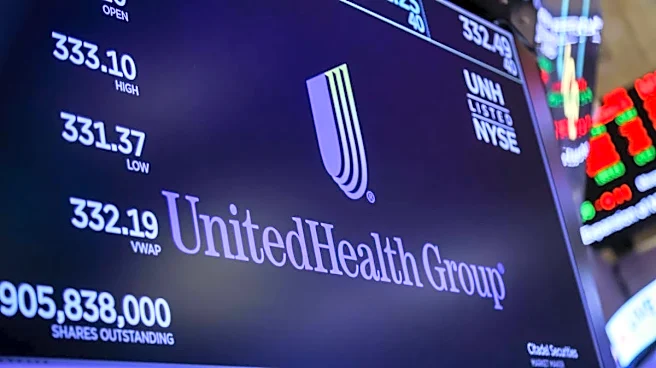
expansion for an additional 38,000 square feet on the 47th floor. Concurrently, the company renewed its existing 38,000-square-foot lease on the 52nd floor for another five years, bringing its total space in the building to 76,000 square feet. The asking rent for the new lease was $135 per square foot. Penn 1, Vornado’s largest office tower in its Penn District, underwent a substantial $450 million renovation in 2023, which added over 160,000 square feet of amenities, including a restaurant and a 35,000-square-foot wellness and fitness center. The building's asking rents are notably higher than Midtown's average office asking rent of $85.55 per square foot, according to August CBRE data. Other prominent tenants in Penn 1 include Samsung, Dell, United Healthcare, Morgan Stanley, and Wells Fargo.
Why It's Important?
This expansion by Gusto at Penn 1 is a significant indicator of continued demand for high-quality office space in Midtown Manhattan, despite broader discussions about remote and hybrid work models. The willingness of a technology firm like Gusto to commit to a long-term, expanded lease at a premium rent ($135 per square foot compared to Midtown's average of $85.55) suggests that top-tier, amenity-rich office properties remain attractive to companies seeking to draw employees back to the office or to accommodate growth. For Vornado Realty Trust, this deal validates its substantial $450 million investment in renovating Penn 1, demonstrating that strategic upgrades and comprehensive amenities can command higher rents and secure major tenants. The presence of other high-profile tenants such as Samsung, Dell, and financial institutions further solidifies Penn 1's status as a desirable corporate address, potentially influencing other businesses to consider similar premium spaces. This trend could signal a flight-to-quality in the commercial real estate market, where older, less-amenitized buildings struggle while modernized properties thrive.
What's Next?
The successful lease expansion and renewal by Gusto at Penn 1 could encourage other technology and corporate tenants to consider similar moves into modernized, amenity-rich office spaces in prime locations. Vornado Realty Trust may leverage this deal to attract additional high-profile tenants to its Penn District properties, potentially leading to further lease agreements and increased occupancy rates. The continued demand for premium office space, as evidenced by Penn 1's asking rents significantly exceeding the Midtown average, might prompt other commercial landlords to invest in similar large-scale renovations and amenity upgrades to remain competitive. This could lead to a broader trend of revitalization in older office buildings across major U.S. cities. Additionally, the deal highlights the ongoing evolution of workplace strategies, where companies are investing in physical spaces that offer enhanced employee experiences, suggesting that the future of office work will likely involve a blend of in-person collaboration supported by high-quality environments.
Beyond the Headlines
The Gusto expansion at Penn 1 reflects a deeper shift in the commercial real estate landscape, where the value proposition of office space is increasingly tied to employee experience and well-being. The $450 million renovation, which included a wellness center and restaurant, underscores a strategic move by landlords like Vornado to transform office buildings into comprehensive ecosystems that support work-life integration. This trend goes beyond mere aesthetics, aiming to foster a sense of community and provide services that enhance productivity and employee retention. The premium rents commanded by Penn 1 suggest that companies are willing to pay more for spaces that act as talent magnets, offering a competitive edge in a tight labor market. This could lead to a widening gap between state-of-the-art, amenity-rich properties and older, less-invested buildings, potentially creating a two-tiered market where only the most modernized spaces thrive. The long-term implications include a redefinition of the urban office, moving from a mere workspace to a hub for collaboration, wellness, and community engagement.