





What's Happening?
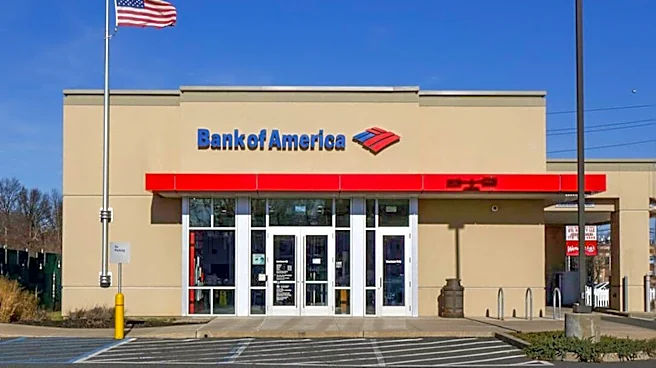
Bank of America has been hit with a record $1.21 billion fine by the Office of the Comptroller of the Currency (OCC) for significant money laundering and sanctions violations. This penalty is the largest ever levied by the OCC. The violations include
thousands of unreported payments totaling $4 billion and missed suspicious activity linked to companies involved in auctioning salvaged cars. Regulators initially identified these issues two years prior to the fine. The announcement of this fine occurred less than 15 hours before Bank of America was scheduled to report its earnings, contributing to an 8% slide in its shares. The fine impacted the bank's earnings per share by 17 cents, resulting in a reported EPS of 91 cents against an expected $1.10. Profit for the bank fell by 17% to $6.93 billion, while revenue increased by 3.2% to $30.12 billion, falling short of estimates by approximately $570 million.
Why It's Important?
This record fine against Bank of America underscores the heightened scrutiny and enforcement actions by U.S. financial regulators regarding compliance with anti-money laundering (AML) and sanctions regulations. The substantial penalty highlights the critical importance for large financial institutions to maintain robust compliance frameworks to detect and prevent illicit financial activities. The immediate impact on Bank of America's stock price and earnings demonstrates how regulatory non-compliance can directly affect a bank's financial performance and investor confidence. This event could prompt other major U.S. banks to review and strengthen their own compliance programs to avoid similar penalties, potentially leading to increased operational costs across the banking sector. Furthermore, the nature of the violations, involving unreported payments and suspicious activities related to specific industries, suggests a need for more sophisticated and diligent monitoring systems within financial institutions to identify complex money laundering schemes.
What's Next?
Following the record fine, Bank of America will likely face continued pressure to enhance its compliance infrastructure and internal controls to prevent future money laundering and sanctions violations. The bank's CEO, Brian Moynihan, has indicated an agreement to settle and move forward, suggesting a focus on remediation efforts. Regulators will likely monitor the bank's progress closely to ensure adherence to compliance standards. This incident may also trigger broader regulatory reviews across the U.S. banking industry, potentially leading to new guidelines or increased enforcement actions for other institutions. Investors and analysts will be watching for how Bank of America addresses these compliance issues and whether it can restore confidence in its operational integrity. The bank's ability to demonstrate effective remediation will be crucial for its long-term reputation and financial stability.
Beyond the Headlines
The Bank of America fine highlights a deeper challenge within the financial industry: the escalating complexity and cost of regulatory compliance. While the immediate focus is on the financial penalty and its impact, the underlying issue points to the continuous cat-and-mouse game between sophisticated illicit financial actors and the systems designed to catch them. The sheer volume of transactions and the intricate nature of global finance make comprehensive oversight incredibly difficult, even for the largest institutions. This situation raises questions about the adequacy of current technological solutions and human resources dedicated to compliance. It also underscores the ethical responsibility of banks to not only comply with regulations but to actively safeguard the financial system from abuse. The long-term implications could include a push for more advanced AI and machine learning tools in compliance, as well as a re-evaluation of the balance between regulatory burden and effective risk management within the U.S. financial sector.