



What's Happening?
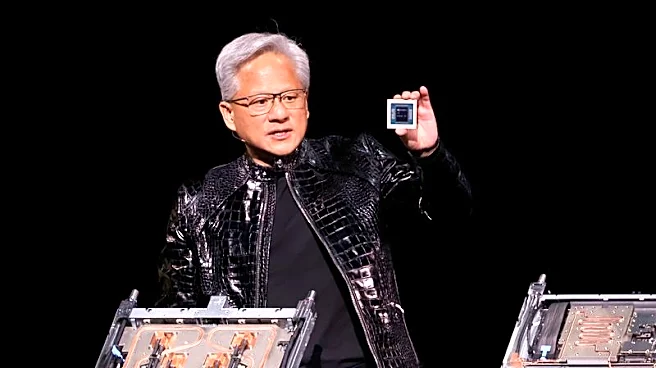
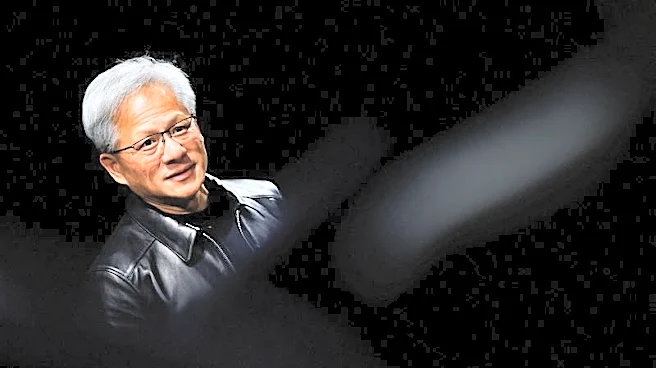
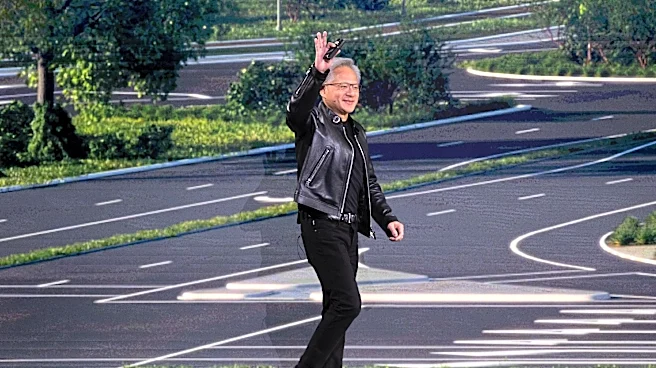
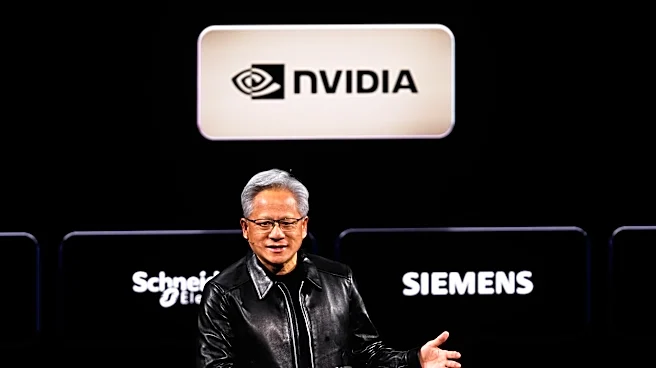
Nvidia shares experienced a significant decline on Thursday, November 12, after CEO Jensen Huang announced his resignation. This leadership change has prompted investors to re-evaluate Nvidia's market position and its central role in the artificial intelligence
economy. Colette Kress, the company's finance chief, has been appointed as interim CEO while Nvidia searches for a permanent successor. The announcement led to a sell-off across various AI-related companies, though rivals like AMD and Broadcom saw gains, suggesting investors might be reallocating within the sector rather than abandoning AI entirely. Nvidia's stock was down 9.7% in early trading, following a sharp selloff the previous evening. This event introduces uncertainty regarding succession, customer confidence, and strategic continuity for the company.
Why It's Important?
The departure of Jensen Huang, a long-standing figure at Nvidia, is a critical event for the technology sector, particularly the AI industry. Nvidia's leadership in AI chip development has made it a cornerstone of the artificial intelligence economy. This sudden change at the top creates uncertainty about the company's future direction, product development, and relationships with key customers and cloud providers. While some investors are shifting towards competitors like AMD and Broadcom, the broader impact on AI infrastructure spending and investor confidence in the sector remains to be seen. The situation highlights how crucial leadership stability is for market valuation, even for companies with strong product portfolios and market demand.
What's Next?
Nvidia will now focus on finding a permanent successor to Jensen Huang, a process that investors will closely monitor for clarity on future leadership and strategic direction. The interim CEO, Colette Kress, will manage immediate operations, but the long-term questions about product development continuity and customer communication remain. Stakeholders will be watching for any shifts in Nvidia's relationships with major cloud providers and other infrastructure businesses. The market will also assess whether this leadership transition affects the premium investors are willing to pay for Nvidia's future growth, potentially leading to continued volatility in its stock price and broader AI-linked shares.
Beyond the Headlines
The resignation of a long-term, influential CEO like Jensen Huang from a company as pivotal as Nvidia can trigger broader discussions about corporate governance, succession planning, and the cult of personality in tech leadership. Beyond immediate stock fluctuations, this event could prompt a re-evaluation of how much a company's valuation is tied to its founder or long-standing leader versus its underlying technology and market position. It also underscores the inherent risks associated with single-point leadership dependencies in rapidly evolving industries like AI, potentially encouraging greater scrutiny of leadership depth and succession strategies across the tech landscape.