




What's Happening?
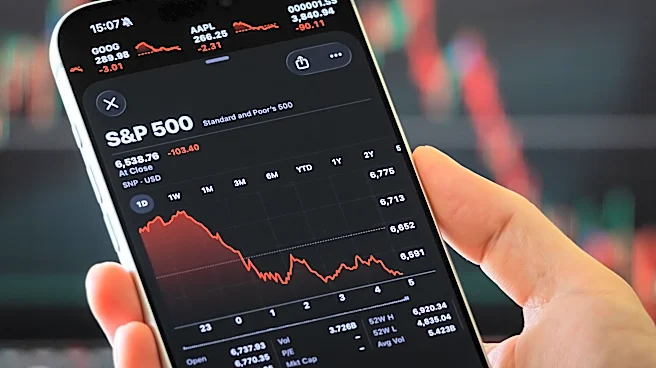
The S&P 500 closed at 6,910.39 on November 20, 2026, marking its seventh consecutive session of losses, a streak not seen since February 2020. This 3.70% drop, or 265.44 points, pushed the index below 7,000 for the first time since April 14, 2026. The State
Street SPDR S&P 500 ETF Trust (SPY) also fell by 3.64% to $689.81. The index is now 11.6% below its record close of 7,818.93 on October 6, officially placing it in a correction, defined as a drop of at least 10% from a record high. Despite this recent downturn, the S&P 500 remains up 0.95% for 2026, indicating that nearly a full year's gains have been erased in approximately six weeks. NVIDIA experienced a significant 14% tumble on Friday, contributing to the market's decline.
Why It's Important?
The S&P 500 entering a correction signifies a notable shift in market sentiment and could have broader implications for U.S. investors and the economy. A correction often signals increased volatility and investor caution, potentially leading to reduced consumer and business spending. For individual investors, this period can result in portfolio value depreciation, especially for those heavily invested in index funds or growth stocks. The extended losing streak, matching the one at the onset of the pandemic selloff in February 2020, may trigger concerns about underlying economic weaknesses or a lack of confidence in future corporate earnings. While some analysts, like Goldman Sachs and Federated Hermes, project significant gains for the S&P 500 next year, the current correction indicates a period of uncertainty that could impact retirement savings, investment strategies, and overall financial planning for many Americans.
What's Next?
The immediate focus will be on the S&P 500's performance on Monday, November 23. A gain would end the current seven-session losing streak, potentially offering a psychological boost to the market. However, another loss would extend the streak to eight sessions, making it the longest since 2016 and possibly intensifying investor concerns. Market participants will closely monitor economic indicators, corporate earnings reports, and any statements from the Federal Reserve for signs of stability or further volatility. The performance of key technology stocks, such as NVIDIA, which experienced a significant drop, will also be a crucial factor. Investors may consider re-evaluating their portfolios and risk exposure in light of the current market correction, while financial institutions will likely adjust their outlooks and recommendations.
Beyond the Headlines
The S&P 500's correction and extended losing streak highlight the inherent cyclical nature of financial markets and the psychological impact of sustained downturns. Beyond the immediate financial losses, such periods can erode investor confidence, leading to a more conservative approach to investment and spending. This shift in behavior can have ripple effects across the broader economy, influencing everything from consumer purchases to corporate expansion plans. The comparison to the February 2020 selloff, while not necessarily indicative of a similar economic crisis, serves as a reminder of how quickly market sentiment can change and the importance of long-term financial planning. It also underscores the ongoing debate among financial experts regarding market valuations and the sustainability of growth, even as some predict significant future gains.