
What's Happening?
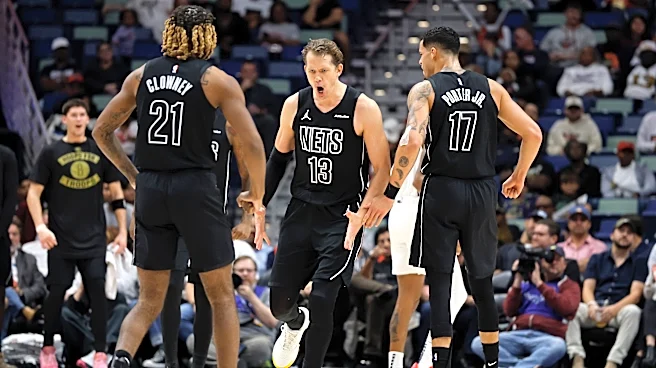
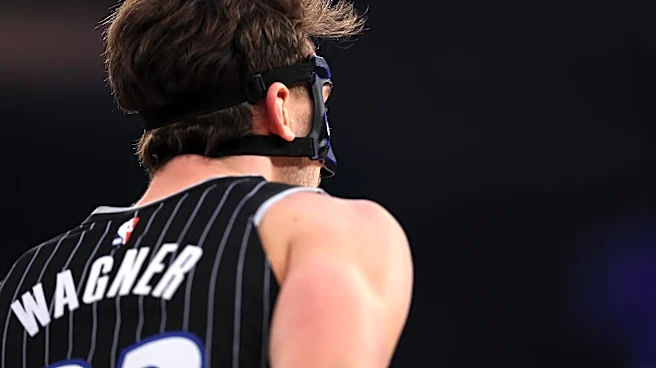
During a recent NBA game where the Brooklyn Nets defeated the New Orleans Pelicans 145-111, Nets player Moritz Wagner and Pelicans coach Jamahl Mosley had a heated on-court exchange. The incident occurred
early in the second quarter after Wagner made a three-pointer. Mosley had reportedly instructed Derik Queen to guard Wagner less closely, a decision Wagner vocally questioned as he went back on defense. Shortly after, Wagner lost the ball to Queen, leading to a Pelicans' distant shot and a Brooklyn timeout. During the timeout, Mosley confronted Wagner, resulting in players and coaches from both teams, as well as referees, intervening to separate them. Mosley was subsequently assessed a technical foul. Wagner, who previously played under Mosley for five years in Orlando, downplayed the idea of a 'revenge game' but admitted he struggles to keep quiet when playing well.
Why It's Important?
This on-court altercation highlights the intense competitive nature of professional basketball and the underlying dynamics between former players and coaches. For the NBA, such incidents, while not uncommon, can draw significant media attention and potentially lead to fines or suspensions, impacting team morale and public perception. For Moritz Wagner, his performance in this game, where he scored 16 points, suggests that such confrontations might fuel his motivation, even if he denies it. For Jamahl Mosley, receiving a technical foul for confronting a player, especially a former one, could raise questions about his sideline demeanor and control, potentially affecting his team's discipline and focus in critical moments. The history between the two, with Wagner's previous injury and reduced playing time under Mosley, adds a layer of personal tension to the professional rivalry.
What's Next?
The NBA will likely review the incident between Moritz Wagner and Jamahl Mosley to determine if any further disciplinary actions, such as fines, are warranted for either party. The Brooklyn Nets and New Orleans Pelicans are scheduled to face each other again on November 21st in Brooklyn, which could see heightened anticipation and scrutiny given the previous encounter. This upcoming game will be a test for both individuals to maintain composure and focus on the game. For Wagner, continuing his strong performance will be key, while Mosley will need to ensure his team remains disciplined. The incident may also influence how other players and coaches interact with former colleagues in future games, potentially leading to more cautious or, conversely, more aggressive exchanges.
Beyond the Headlines
The clash between Wagner and Mosley extends beyond a simple on-court spat, touching upon the complex relationships that develop within professional sports teams. Mosley had coached Wagner for five years, during which Wagner developed into a key player before a knee injury and subsequent reduced playing time under Mosley. This history suggests a deeper narrative of professional disappointment and perceived slights that can resurface in competitive environments. Such personal histories, while often kept private, can significantly influence player-coach dynamics and team chemistry. The incident also underscores the emotional toll and pressure on athletes and coaches, where past grievances can manifest in highly public ways. It serves as a reminder that professional sports are not just about statistics and strategies, but also about human emotions, relationships, and the drive for success.