






What's Happening?
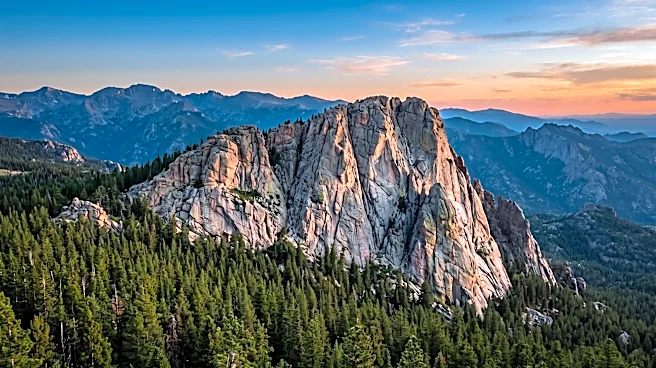
A new guidebook titled 'A Climber’s Guide to Old Stage Road' has been released, detailing over 300 climbing routes in a previously less-documented area of Colorado Springs' southwest mountains. Authors Sam Jones and Dakota Millard compiled the guide,
which includes areas like The Sanctum, known for its handful of routes, and other crags such as Grayback Peak, St. Peter’s Dome, Big Chief, Little Chief, and The Citadel. The guidebook aims to make climbing information more accessible, moving away from a historical tradition where knowledge of these routes was often guarded by a select few. The release has been met with gratitude from many climbers, though it has also sparked debate among the local climbing community regarding the balance between accessibility and preserving the area's traditional, more private climbing culture. The Pikes Peak Climber’s Alliance has advised climbers to inspect anchors due to reports of vandalism.
Why It's Important?
This guidebook marks a significant shift in the climbing culture of Colorado Springs, potentially ushering in a 'new golden-era boom' for the sport in the region. By democratizing access to information about Old Stage Road's climbing routes, it can attract more climbers, boosting local outdoor recreation and potentially impacting local businesses that cater to climbers. However, this increased accessibility also brings challenges, including the need for greater stewardship of the natural environment and potential conflicts with those who prefer the area's historical exclusivity. The reports of anchor vandalism highlight the tensions that can arise when long-held traditions of secrecy are challenged by efforts to broaden participation. The guide's emphasis on community and responsible engagement will be crucial in shaping the future of this unique climbing destination.
What's Next?
The release of 'A Climber’s Guide to Old Stage Road' is expected to lead to increased traffic and interest in the climbing areas along Old Stage Road. This will likely necessitate greater collaboration between climbers, local authorities like the U.S. Forest Service, and organizations such as the Pikes Peak Climber’s Alliance to manage the impact of more visitors. Discussions around stewardship, conservation, and infrastructure (like anchor maintenance) are anticipated to intensify. The climbing community will need to navigate the balance between welcoming new participants and preserving the natural integrity and unique character of these climbing spots. The authors hope the guidebook will inspire climbers to take on the mantle of stewardship, displacing negative activities and fostering a stronger connection to the natural world.
Beyond the Headlines
The narrative surrounding 'A Climber’s Guide to Old Stage Road' delves into a deeper philosophical debate within outdoor recreation: the tension between exclusivity and accessibility, and the evolving definition of 'community' in shared natural spaces. Historically, some climbing areas have been shrouded in secrecy, with knowledge passed down through a select few, fostering a sense of mystique and perhaps, for some, a purer connection to the sport. This guidebook challenges that tradition, inviting a broader audience to experience these routes. This shift raises questions about the ethics of information sharing in outdoor sports, the potential for increased environmental impact, and the responsibility of users to become stewards of these fragile ecosystems. The conflict over anchor vandalism underscores the passionate, sometimes divisive, nature of these debates, reflecting differing views on how best to honor the past while shaping a sustainable future for climbing areas.