







What's Happening?
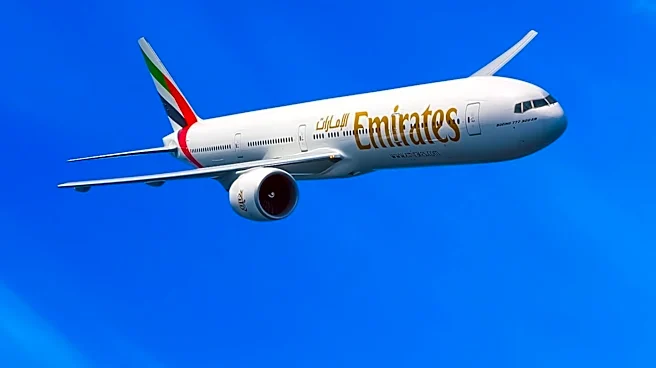
Emirates, a major Middle Eastern airline, is implementing a new economy-class seat headrest designed to improve passenger comfort during flights. The headrest, known as 'U-Dream', is developed by Safran for its Z400 seat and features fold-down wing sections
that can be adjusted to support the head and neck. This design aims to help passengers maintain a comfortable sleeping position without their heads falling forward or sideways. Emirates has already equipped three Airbus A350-900s with this new headrest and plans to install it across its entire fleet of A350s by the end of the year. Additionally, the headrest will be standard on all Boeing 777Xs and will be retrofitted on 777-300ERs and A380s. Emirates President Tim Clark stated that the feature will significantly enhance economy-class comfort, eliminating the need for neck pillows.
Why It's Important?
The introduction of the U-Dream headrest by Emirates represents a significant advancement in passenger comfort for economy-class travelers. This move could set a new standard in the airline industry, as comfort enhancements are a key factor in customer satisfaction and loyalty. By improving the in-flight experience, Emirates may attract more passengers, potentially increasing its market share in the competitive airline industry. The innovation also highlights the ongoing trend of airlines investing in cabin upgrades to differentiate themselves and enhance the overall travel experience. This development could prompt other airlines to adopt similar features, leading to broader improvements in economy-class travel.
What's Next?
Emirates plans to complete the installation of the U-Dream headrest across its A350 fleet by the end of the year and will continue to retrofit its other aircraft models. As the first airline to introduce this design, Emirates may monitor passenger feedback to assess the impact on customer satisfaction and make further adjustments if necessary. The airline industry will likely observe Emirates' implementation closely, and competitors may consider similar upgrades to remain competitive. Additionally, the success of this feature could influence future aircraft design and seating innovations, potentially leading to more widespread adoption of comfort-focused technologies.