







What's Happening?
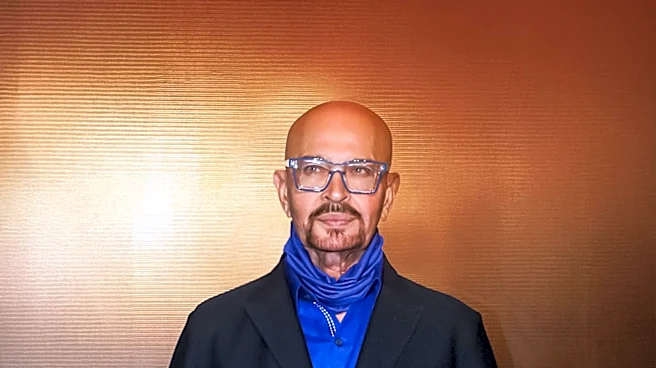
America's Got Talent judge Howie Mandel has openly discussed his lifelong battle with obsessive-compulsive disorder (OCD) and anxiety, revealing the profound impact these conditions have on his daily life. Mandel, 70, shared these insights at a Los Angeles
launch event for 'Too Close for Comfort: Coping with a Dependent Loved One,' a book by his psychiatrist, Dr. Tamir Aldad, for which Mandel wrote the foreword. He likened his struggle to that of billionaire recluse Howard Hughes, admitting he is constantly tempted towards extreme seclusion. Mandel emphasized the difficulty his condition poses, stating, 'I am on the verge of that each and every day. It is so much easier to just to lock yourself away.' He also credited his wife, Terry, and their children for their quiet accommodation over the years, including sanitizing their home and avoiding physical contact. Mandel was diagnosed with OCD in his early 40s and has also been diagnosed with attention-deficit/hyperactivity disorder (ADHD). He is a public partner in NOCD's KnowOCD campaign, which aims to reduce stigma and improve access to treatment for OCD.
Why It's Important?
Howie Mandel's candid revelations about his OCD and anxiety are significant for several reasons. Firstly, his public platform as a well-known television personality helps to destigmatize mental health conditions, encouraging more open conversations about disorders like OCD. By comparing his experiences to those of Howard Hughes, Mandel highlights the severe and isolating nature of untreated or unmanaged OCD, drawing attention to the potential for extreme withdrawal. His participation in NOCD's KnowOCD campaign underscores the importance of advocacy and accessible treatment for mental health. This transparency can empower individuals struggling with similar conditions to seek help, knowing that even public figures face these challenges. Furthermore, his acknowledgment of the toll his condition has taken on his family, particularly his wife, sheds light on the broader impact of mental health disorders on loved ones and the need for support systems for caregivers. The discussion about therapy's positive impact on his family life further emphasizes the value of professional mental health intervention.
What's Next?
Following his public disclosures, Howie Mandel is expected to continue his advocacy for mental health awareness, particularly through his involvement with NOCD's KnowOCD campaign. His foreword in Dr. Tamir Aldad's new book, 'Too Close for Comfort: Coping with a Dependent Loved One,' will likely further promote discussions around mental health and the challenges faced by individuals and their families. The book's release and Mandel's support could lead to increased public engagement with mental health resources and a greater understanding of conditions like OCD. It is anticipated that Mandel will continue to use his platform on 'America's Got Talent' and other public appearances to share his experiences and encourage others to seek help, reinforcing the message that mental wellness should be prioritized akin to physical health. His ongoing transparency may also inspire other public figures to share their own struggles, contributing to a broader cultural shift in how mental health is perceived and addressed.
Beyond the Headlines
Howie Mandel's personal narrative extends beyond a celebrity's health update; it delves into the ethical and societal implications of living with severe mental health conditions. His comparison to Howard Hughes highlights a historical pattern of individuals with extreme OCD retreating from society, raising questions about how society supports or fails those with debilitating mental illnesses. The discussion of his wife's role in accommodating his compulsions, and the psychiatrist's warning about such indulgence fueling a destructive cycle, brings to light the complex dynamics within families affected by mental illness. It underscores the fine line between support and enabling, and the critical need for professional guidance not just for the individual, but for their entire support system. Mandel's journey from a child labeled 'weird' to a successful comedian who monetized his quirks offers a powerful message about resilience and finding purpose despite mental health challenges, suggesting a re-evaluation of societal perceptions of 'normalcy' and 'deviance' in behavior.