




What's Happening?
Effective July 1, 2026, the European Union has terminated its de minimis exemption for certain items valued up to 150 euros destined for EU countries. This change introduces new customs requirements for shipments from the U.S. to the EU. Specifically,
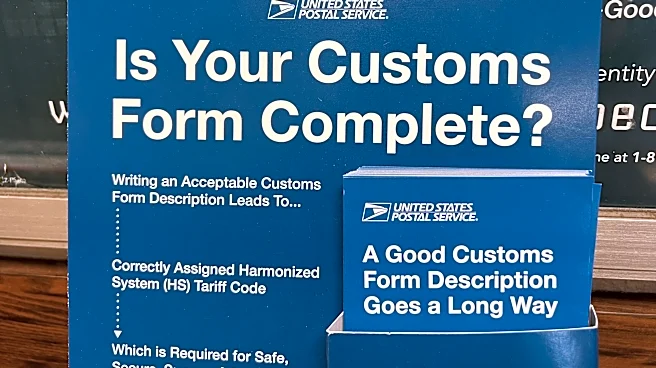
a temporary 3 euro customs duty will be applied per customs form line item for business-to-consumer (B2C) shipments valued up to 150 euros and consumer-to-consumer (C2C) shipments valued between 45 and 150 euros. Additionally, a permanent 2 euro handling fee will be implemented starting November 1, 2026, for all B2C shipments. Beginning July 1, 2027, some EU countries will mandate the prepayment of duties, taxes, and fees, which can be facilitated through services like USPS Delivered Duty Paid (DDP). Furthermore, as of November 1, 2026, commercial senders shipping certain items to the EU must include product identifiers (PIDs) in their customs declarations, including merchant, non-standardized manufacturer, and standardized manufacturer PIDs.
Why It's Important?
The cessation of the EU's de minimis exemption significantly impacts U.S. businesses that export goods to the European market, particularly those involved in e-commerce and small-value shipments. Previously, these low-value imports entered the EU duty-free, but now they will incur additional duties, taxes, and handling fees. This change will likely lead to increased shipping costs and potentially lower profit margins for U.S. exporters, as they may need to absorb these new costs or pass them on to consumers. The new customs requirements, including the mandatory inclusion of product identifiers and the potential for prepaid duties, will also add complexity to the shipping process, requiring businesses to adapt their operations and compliance procedures. Failure to comply could result in penalties, package confiscation, or delays, affecting delivery times and customer satisfaction. Small businesses with limited financial resources and tight margins may find these adjustments particularly challenging.
What's Next?
U.S. businesses exporting to the EU must proactively review and comply with these new customs requirements. This includes understanding the specific duties and fees applicable to their shipments, ensuring accurate and detailed customs declarations with the required product identifiers, and preparing for potential mandatory duty prepayment in certain EU countries. Shipping partners like USPS are offering services such as Delivered Duty Paid (DDP) to help customers prepay import duties, taxes, and fees, which can streamline delivery and avoid unexpected costs for recipients. Businesses should also anticipate potential delivery delays due to increased customs inspections and processing for the millions of small parcels now subject to these new regulations. Adapting to these changes will be crucial for maintaining smooth international trade operations and customer relationships.
Beyond the Headlines
The EU's decision to end the de minimis exemption reflects a broader global trend towards stricter regulation of international e-commerce and a push to level the playing field between domestic and foreign sellers. This move could be seen as an effort to protect local markets and ensure that all goods sold within the EU are subject to similar tax and duty obligations, regardless of their origin or value. For U.S. businesses, this shift underscores the increasing complexity of international trade and the need for robust compliance strategies. It may also encourage businesses to re-evaluate their supply chains and potentially explore localized fulfillment options within the EU to mitigate the impact of these new costs and administrative burdens. The emphasis on product identifiers also highlights a move towards greater transparency and traceability in international shipments, which could have long-term implications for data collection and regulatory oversight in global trade.