






What's Happening?
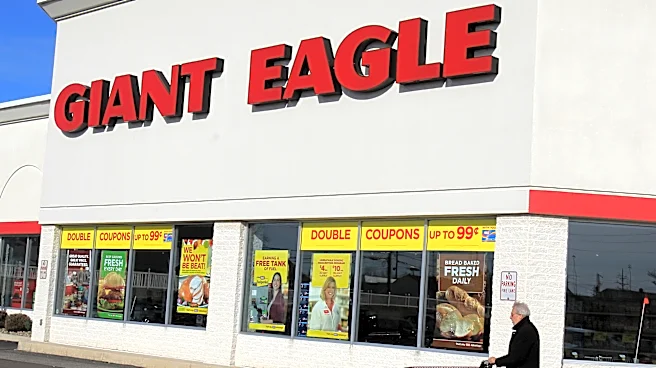
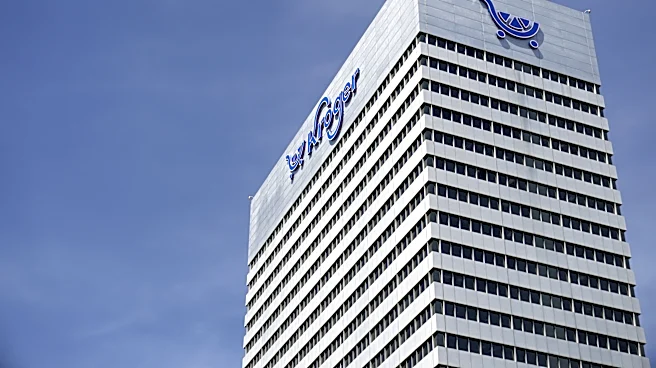
Kroger has announced plans to acquire the Pittsburgh-based grocery chain Giant Eagle for $1.65 billion. This acquisition builds on a historical connection between the two companies that dates back to the early 20th century. The Goldstein, Porter, and
Chait families originally established Eagle Grocery in 1918, which was later sold to Kroger in 1928. Following this sale, the families agreed not to engage in the grocery business for three years. During this period, the Moravitz and Weizenbaum families developed their own grocery chain, OK Grocery. In 1931, these families combined efforts to form Giant Eagle, which opened its first supermarket in 1936. The acquisition is expected to close in 2027, with limited store divestitures anticipated to complete the transaction.
Why It's Important?
The acquisition of Giant Eagle by Kroger represents a significant consolidation in the grocery industry, potentially impacting market competition and consumer choice in the Pittsburgh area and beyond. For Kroger, this move could enhance its market presence and operational efficiencies by integrating Giant Eagle's established network. However, the deal may also lead to store closures or rebranding, affecting local employment and community dynamics. The historical ties between the companies underscore a long-standing relationship that could influence the strategic direction of the merged entity. Stakeholders, including employees, customers, and local businesses, may experience changes in service offerings and pricing structures as a result of this acquisition.
What's Next?
As the transaction progresses towards its expected closure in 2027, both Kroger and Giant Eagle will need to navigate regulatory approvals and address any antitrust concerns. The companies have indicated that limited store divestitures may be necessary, though the exact number of stores affected remains unclear. Stakeholders will be closely monitoring how the integration process unfolds, particularly in terms of potential impacts on employment and local economies. Additionally, consumer advocacy groups may scrutinize the deal for its effects on market competition and pricing. The outcome of these developments will shape the future landscape of the grocery industry in the region.