






What's Happening?
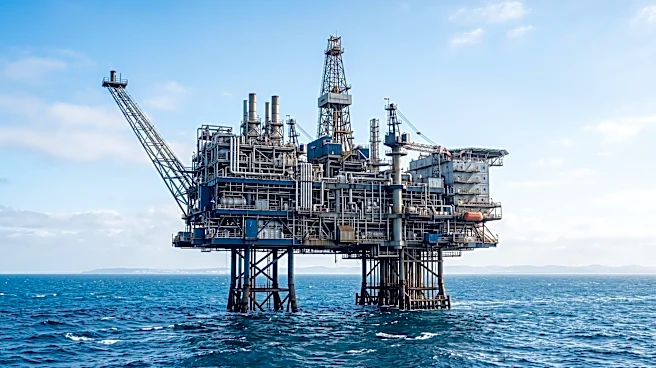
Karoon Energy, an Australian oil and gas producer, has revised the estimated development costs for Phase 1 of its Neon offshore oil project in Brazil. The new estimate for Phase 1 development costs is between $800 million and $950 million, including contingency,
a reduction from the previous forecast of $900 million to $1.2 billion made in April 2025. This revised figure represents the total project cost before any potential reduction in Karoon's ownership interest. The Neon project, located in the Santos Basin approximately 75 kilometers northeast of Karoon's Baúna project, is being developed with a phased approach to limit upfront investment and mitigate subsurface risks. The initial development plan now includes three subsea production wells and one gas injection well, a change from the previous plan of four production wells. Karoon anticipates that Phase 1 could recover approximately 60 million barrels of oil, contributing to Neon's total 90.3 million barrels of 2C contingent resources, with a target peak production of 25,000 to 30,000 barrels per day.
Why It's Important?
This cost reduction and revised development strategy for the Neon project are significant for Karoon Energy and potential investors. By lowering the capital expenditure, Karoon aims to enhance the project's financial attractiveness, as evidenced by the projected post-tax, unlevered internal rate of return in the mid-20% range, based on a long-term Brent crude price of $73.50 per barrel in 2026 real terms. The company also estimates a capital payback period of less than two years after production commences, and its downside scenario, with Brent at $60 per barrel, remains net-present-value positive. The decision to reassess the project in late 2025, driven by declining oil prices and increased costs for the previously preferred FPSO, highlights the sensitivity of large-scale energy projects to market fluctuations and technological advancements. Securing a partner for a 30% to 50% interest in Neon is crucial for the project's final investment decision, indicating a strategic move to share risks and capital requirements.
What's Next?
Karoon Energy plans to restart its farm-down process before the end of 2026, actively seeking a partner to acquire a 30% to 50% interest in the Neon project. Securing a suitable partner on acceptable terms is a prerequisite for the project's final investment decision, which Karoon is targeting for the second half of 2027. Approximately $25 million is expected to be spent on Front-End Engineering Design (FEED), which will involve further engineering, obtaining binding supplier bids, and refining the development's commercial strategy. During FEED, Karoon will also evaluate a leasing alternative for the Floating Production, Storage and Offloading (FPSO) vessel, which could potentially lower upfront capital requirements in exchange for higher operating costs. The company has already signed a memorandum of understanding with TechnipFMC for subsea engineering and execution planning and an exclusivity agreement with Altera Infrastructure regarding the potential redeployment of the Piranema Spirit FPSO.
Beyond the Headlines
The strategic adjustments made by Karoon Energy for the Neon project reflect a broader trend in the oil and gas industry towards optimizing capital efficiency and mitigating risks in volatile market conditions. The shift to a phased development approach and the exploration of leasing options for critical infrastructure like FPSOs demonstrate a flexible and adaptive strategy to manage large-scale investments. This approach could set a precedent for other energy companies facing similar challenges, emphasizing the importance of continuous reassessment and innovation in project development. The pursuit of a farm-down partner also underscores the increasing prevalence of joint ventures and partnerships in the energy sector to distribute financial burdens and leverage diverse expertise. The project's success will not only impact Karoon Energy's financial performance but also contribute to Brazil's oil production capacity, influencing regional energy markets and potentially attracting further foreign investment into the country's offshore resources.