



What's Happening?
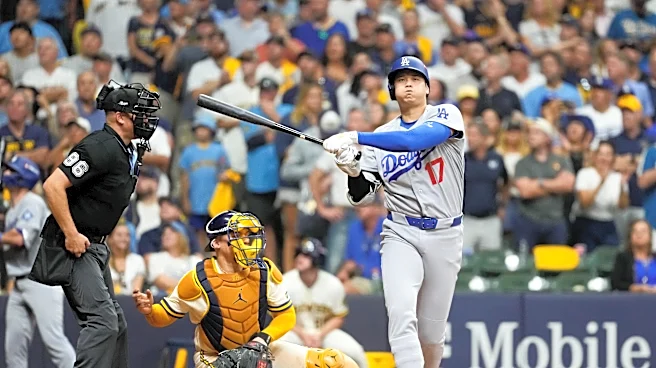
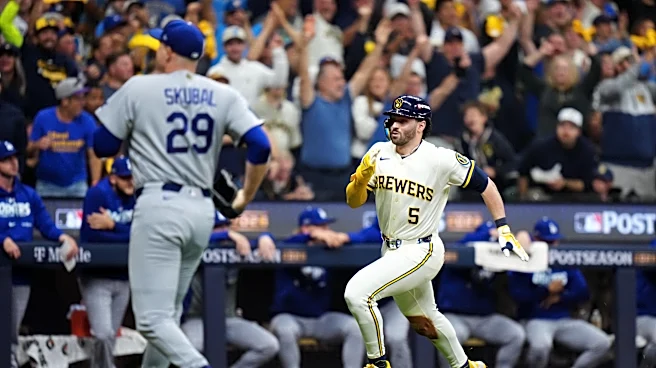
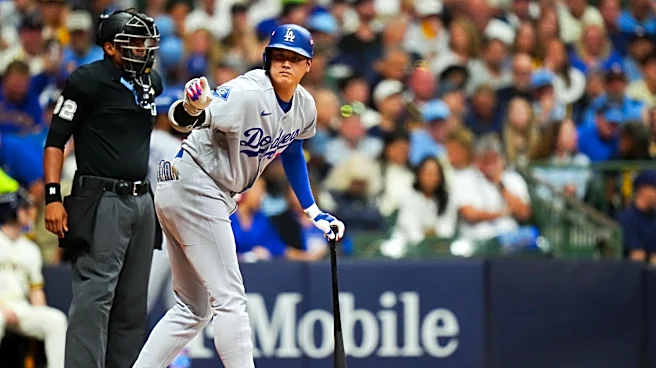
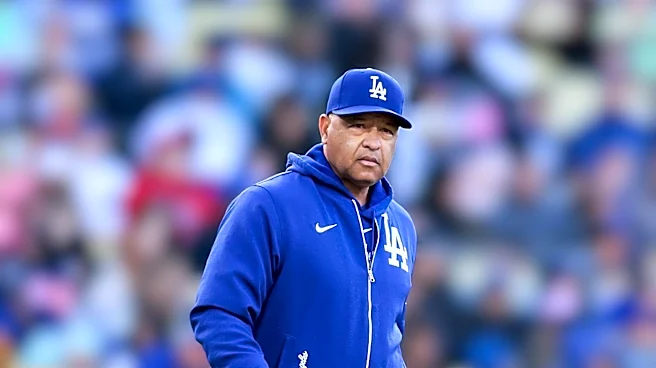
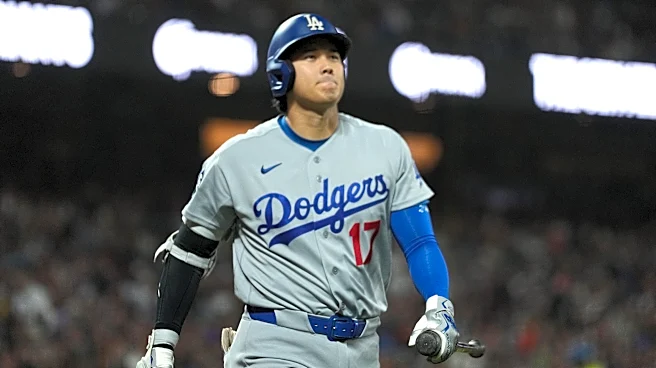
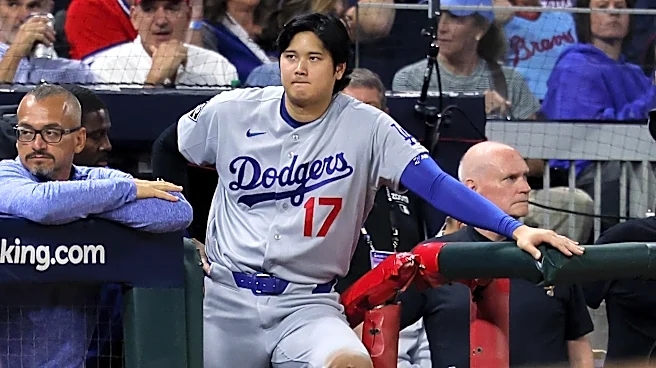
Los Angeles Dodgers manager Dave Roberts is pushing back against suggestions for the team to adopt a 'small ball' approach, despite a recent game where their offense struggled. In Game 1, the Dodgers scored only one run with seven hits and six walks,
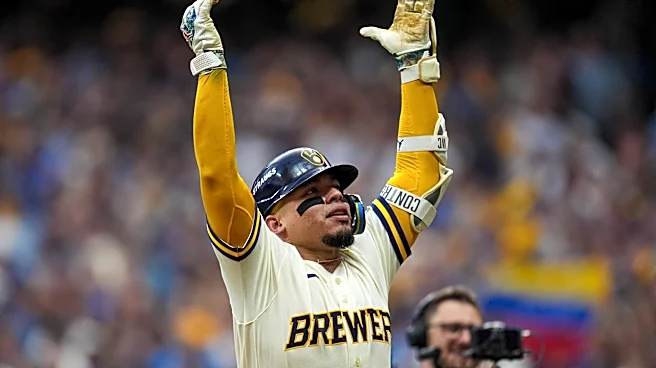
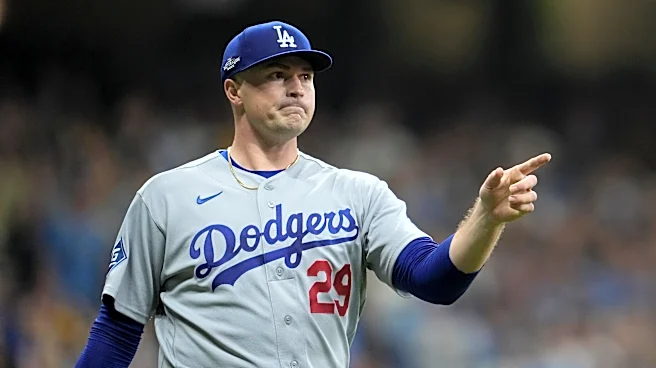
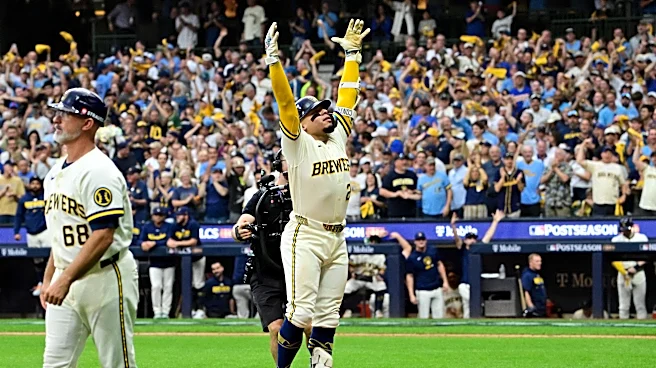
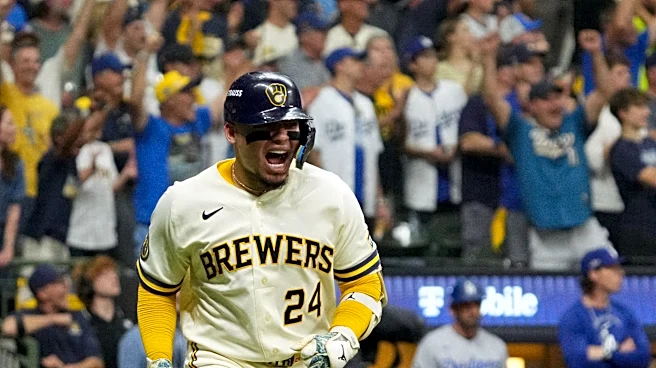
leaving nine runners on base and going 1-for-6 with runners in scoring position. In contrast, the opposing team, the Brewers, manufactured runs effectively, including a go-ahead run after a bunt. Roberts emphasized that the Dodgers are 'built to slug' and lack the personnel for a small-ball strategy. He noted that the team ranks 28th in stolen bases, 27th in base-running rating, and 22nd in weighted stolen bases above average, indicating they are not a strong running team. Roberts believes that while some aspects of small ball are just 'baseball,' a full shift in strategy would require different players. He stated that the Dodgers will continue to rely on hard contact and their slugging capabilities for the remainder of the postseason.
Why It's Important?
This stance by Dave Roberts highlights a fundamental strategic debate in baseball, particularly in high-stakes postseason play. The Dodgers' commitment to a power-hitting, slugging offense, despite moments of inefficiency, reflects a broader trend in modern baseball where analytics often favor home runs and extra-base hits over traditional small-ball tactics like bunts and stolen bases. For the Dodgers, a team with significant financial investment in star sluggers, maintaining this approach is crucial to maximizing their roster's strengths. A shift to small ball could undermine the very identity and construction of the team, potentially leading to underperformance from their high-value players. This decision also impacts fan expectations and the team's brand, as the Dodgers are known for their offensive firepower. The success or failure of this strategy in the postseason could influence future team building and managerial decisions across MLB, demonstrating the ongoing tension between traditional baseball wisdom and contemporary analytical approaches.
What's Next?
The Los Angeles Dodgers are expected to continue with their slugging-focused offensive strategy throughout the remainder of the postseason. Manager Dave Roberts has clearly articulated that the team is not equipped for a 'small ball' approach, citing their personnel and statistical rankings in base running. This means fans and opponents can anticipate the Dodgers to prioritize power hitting and hard contact in their upcoming games. The team will likely focus on improving their performance with runners in scoring position within their existing framework, rather than attempting to implement bunts or more aggressive base stealing. The effectiveness of this strategy will be closely watched, especially if they face further offensive struggles. Their performance in subsequent games will either validate Roberts's decision or intensify calls for strategic adjustments, potentially leading to further discussions about the optimal offensive approach for a team built around power hitters.
Beyond the Headlines
The debate over 'small ball' versus 'slugging' in baseball extends beyond immediate game strategy, touching upon the evolution of the sport itself. Modern analytics have increasingly emphasized the value of home runs and walks, often de-emphasizing traditional small-ball tactics like sacrifice bunts and stolen bases due to their lower probability of success and limited run production compared to a big hit. Dave Roberts's defense of the Dodgers' slugging identity reflects this analytical shift, where teams are built to maximize high-impact plays. However, the Brewers' success in manufacturing runs through small ball in the same game highlights that situational baseball still holds value, especially in tight postseason contests. This ongoing tension between data-driven power offenses and opportunistic small-ball tactics raises questions about the aesthetic and strategic future of baseball, influencing how teams are constructed, how managers make in-game decisions, and ultimately, the type of game fans experience.