






What's Happening?
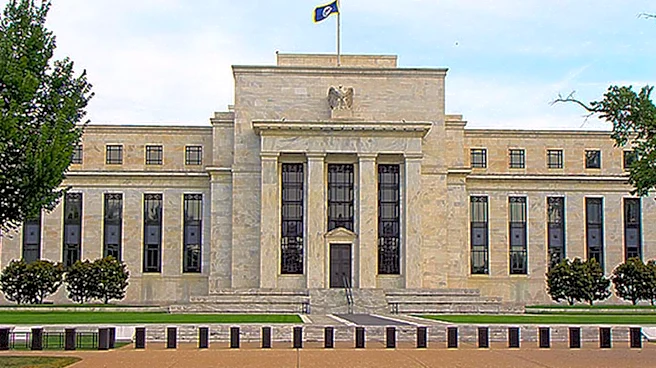
The Federal Reserve is considering raising interest rates, a move that could initiate a new tightening cycle. This comes after three Federal Open Market Committee (FOMC) officials voted for a rate increase in July, amid inflation rates exceeding the Fed's
2% target for over five years. The Personal Consumption Expenditures (PCE) price index, a key measure of inflation, reached 4.1% in May due to geopolitical tensions affecting oil supplies, and slightly decreased to 3.7% in June. Historically, the initiation of a rate-hiking cycle has led to significant corrections in major stock market indexes, with the S&P 500 and Nasdaq Composite experiencing average declines of 10% and 12%, respectively, within three months of the first rate hike.
Why It's Important?
The potential rate hike by the Federal Reserve is significant as it could lead to a stock market correction, affecting investors and the broader economy. Higher interest rates typically make bonds more attractive, drawing investment away from equities and increasing borrowing costs for companies, which can slow corporate earnings growth. This scenario poses a risk to the current economic resilience and strong corporate financial results that have driven recent stock market gains. The decision to raise rates is influenced by persistent inflationary pressures, which are unlikely to subside without central bank intervention. The Fed's actions will be closely watched by investors, as they could signal a shift in monetary policy that impacts financial markets and economic growth.
What's Next?
Traders anticipate that the Federal Reserve will raise interest rates by a quarter percentage point in September 2026, followed by another hike in March 2027. This expectation is supported by the FOMC's recent projections, with several members indicating the likelihood of at least one or two rate hikes by the end of 2026. The Fed's decision will depend on ongoing inflationary pressures and economic conditions. Investors should prepare for potential market volatility as the Fed's actions could lead to a correction in stock market indexes, similar to past tightening cycles.