


What's Happening?
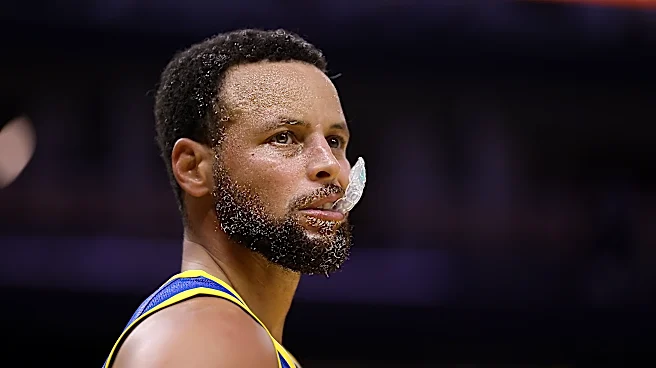
Former NBA player Nick Young has issued an apology to Golden State Warriors star Steph Curry after making comments about Ayesha Curry's on-screen kissing scene in her new Roku holiday film, 'Second Chance Holiday.' Young, along with Gilbert Arenas and
Emmanuel Acho, had discussed the scene on podcasts, with Arenas referring to Ayesha Curry as a 'blemish' in the Curry family. Steph Curry publicly addressed these criticisms in an Instagram video, calling out the individuals for attempting to diminish his wife's accomplishments and highlighting a broader issue regarding how women and acting are perceived. Following Curry's video, Young apologized directly, stating, 'I’m sorry, Steph. You my dog, I love you. If I say anything, I apologize like a man.' Emmanuel Acho also issued an apology on his podcast, acknowledging that his public comments required a public retraction.
Why It's Important?
This incident highlights the intersection of celebrity, social media, and public commentary, particularly concerning the personal lives of public figures. Steph Curry's defense of his wife underscores the challenges faced by spouses of high-profile athletes and entertainers when their professional work becomes subject to public scrutiny and criticism. The swift apologies from Nick Young and Emmanuel Acho after Curry's direct response demonstrate the significant influence athletes can wield in controlling narratives and demanding respect for their families. The situation also sparked a broader conversation among fans and commentators about the appropriateness of public figures critiquing the personal and professional lives of others, especially when those critiques are perceived as disrespectful or misogynistic. It reflects the ongoing debate about privacy and public image in the digital age.
What's Next?
While Nick Young and Emmanuel Acho have issued apologies, the incident has generated significant discussion on social media, with some fans drawing comparisons between Steph Curry's reaction and past instances involving Will Smith defending his wife. This suggests that the event may continue to be a point of reference in discussions about celebrity relationships and public conduct. The broader conversation about how women in entertainment are perceived and critiqued is likely to persist, especially as more public figures use their platforms to address such issues. The incident also serves as a reminder for commentators and media personalities about the potential repercussions of their public statements, particularly when they involve the families of other public figures.
Beyond the Headlines
The public's reaction to Steph Curry's defense of Ayesha Curry, including comparisons to Will Smith, reveals a societal fascination with how celebrity couples navigate public scrutiny and perceived disrespect. This incident touches upon themes of chivalry, gender roles, and the boundaries of public commentary in the age of social media. It also subtly highlights the pressure on public figures to maintain a certain image, not just for themselves but for their families. The 'Will Smith vibes' comments suggest a cultural memory of past celebrity controversies and how they shape public expectations for how famous individuals should respond to perceived slights. This event, therefore, is not just about a specific apology but also about the evolving dynamics of public discourse, celebrity culture, and the defense of personal boundaries in a highly visible world.