









What's Happening?
North American manufacturers are increasingly adopting robotics, with 36,766 robots valued at $2.25 billion ordered in 2025. This trend is expected to continue in 2026, driven by technologies such as edge AI, collaborative robots, vision-guided systems,
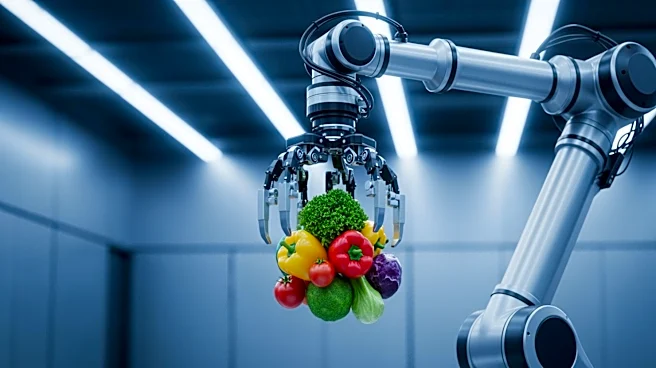
and digital twins. Despite geopolitical tensions affecting global manufacturing growth forecasts, the demand for robotics is diversifying beyond the automotive sector into life sciences, electronics, and food processing. This shift indicates a maturing market where robotics adoption is no longer confined to a single industry.
Why It's Important?
The expansion of robotics across various sectors signifies a transformative shift in manufacturing, enhancing efficiency and reducing reliance on human labor. This diversification helps mitigate risks associated with geopolitical tensions, such as increased input costs due to conflicts and tariffs. By adopting advanced technologies, manufacturers can improve operational efficiency, reduce costs, and maintain competitiveness in a volatile global market. The move towards automation also supports reshoring efforts, bringing production back to the U.S. and addressing workforce shortages.
What's Next?
As manufacturers continue to integrate robotics and AI technologies, the focus will likely shift towards optimizing these systems for greater efficiency and adaptability. This includes developing modular and reconfigurable automation systems to handle changing production demands. Additionally, the ongoing geopolitical tensions may prompt further investment in domestic manufacturing capabilities, reinforcing the trend towards reshoring. Companies will need to navigate these challenges while leveraging technology to maintain a competitive edge.