






What's Happening?
The Carlyle Group, a global private equity firm, has significantly expanded its real estate portfolio in Brooklyn, New York, by acquiring nearly two dozen small apartment buildings over the past year. These acquisitions amount to approximately $90 million.
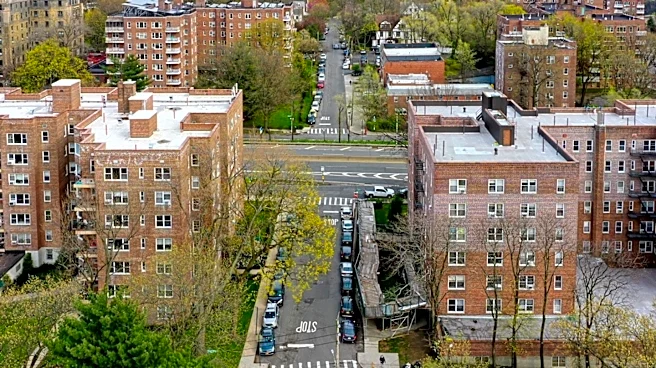
This recent activity is part of a broader five-year investment strategy in New York City, bringing Carlyle's total ownership to over 260 rental units across the city, with a cumulative investment exceeding $800 million. The targeted properties are typically pre-war walk-ups with a limited number of apartments, often located in neighborhoods such as Bushwick, Prospect Heights, Greenpoint, and Ridgewood in Queens. Brokers indicate that the appeal of these specific properties lies in their potential for rent growth and reduced tax burdens, largely because their small size often exempts them from the city's rent-stabilization program, which applies to buildings with six or more units.
Why It's Important?
This aggressive acquisition strategy by The Carlyle Group highlights a significant trend in the U.S. real estate market, particularly in high-demand urban centers like New York City. The focus on smaller, non-rent-stabilized properties allows investors to bypass regulations that limit rent increases, potentially leading to higher returns. This approach can have a substantial impact on the affordability and availability of housing for residents, as market-rate rents can be adjusted more freely. For the real estate industry, it signals continued investor confidence in specific segments of the urban housing market, even amidst broader economic fluctuations. The influx of institutional capital into these types of properties could also drive up property values, affecting local homeowners and smaller landlords. The strategy underscores the ongoing tension between investor returns and housing affordability in major U.S. cities.
What's Next?
The Carlyle Group's continued investment in Brooklyn's residential market suggests a sustained focus on acquiring properties that offer flexibility in rent adjustments. This trend could lead to further consolidation of smaller apartment buildings under institutional ownership in New York City and potentially other urban areas with similar housing regulations. Local community groups and housing advocates may increase their calls for expanded rent control measures or other policies to protect tenants in non-stabilized units, especially as more properties transition to institutional ownership. The firm's success in generating returns from these acquisitions could also encourage other private equity firms to adopt similar strategies, intensifying competition for these types of properties and potentially accelerating changes in local housing markets. Future legislative efforts regarding rent stabilization and tenant protections in New York City will be crucial in shaping the long-term impact of these investment patterns.
Beyond the Headlines
The Carlyle Group's strategy of targeting small, non-rent-stabilized apartment buildings in Brooklyn raises deeper questions about the evolving nature of urban housing and the role of large investment firms. While the firm seeks to maximize returns by acquiring properties with fewer regulatory constraints, this practice can contribute to the erosion of affordable housing options for many residents. The shift from individual landlords to institutional owners can also alter the dynamics of tenant-landlord relationships, potentially leading to more standardized and less personalized management approaches. This trend highlights a broader societal debate about whether housing should be primarily viewed as a commodity for investment or a fundamental right. The long-term implications could include increased gentrification, displacement of long-term residents, and a widening gap in housing accessibility, prompting discussions about ethical investment practices and the need for more comprehensive housing policies.