
What's Happening?
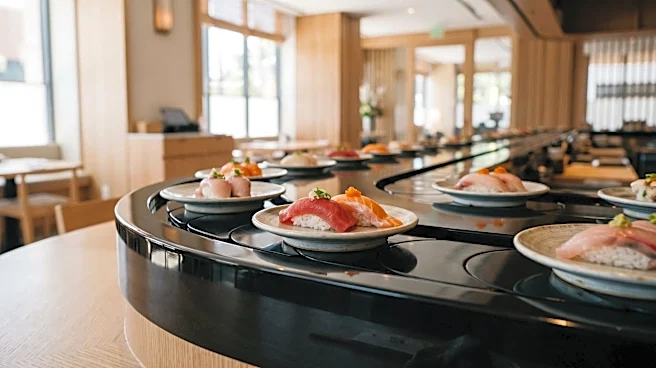
Kura Sushi USA is on the verge of opening its 100th U.S. restaurant in December, marking a significant expansion for the revolving sushi chain. CEO Jimmy Uba notes that the company's growth demonstrates
the widespread appeal of revolving sushi across America, even in smaller markets outside major metropolitan areas like Glen Allen, Virginia; West Des Moines, Iowa; and Greenwood Village, Colorado. Kura Sushi, founded in Japan in 1977, initially struggled to introduce its unique model in the U.S. in 2008 but pivoted to its signature revolving concept a year later. The company went public in 2019 and plans to open 17 restaurants in fiscal 2027, 18 in 2028, and 19 in 2029, aiming for a long-term goal of 300 U.S. units within approximately a decade.
Why It's Important?
Kura Sushi's rapid expansion and success in diverse U.S. markets signify a growing acceptance and demand for innovative dining experiences, particularly in the fast-casual and casual dining sectors. This trend challenges traditional notions of sushi consumption, making it more accessible and entertaining for a broader American audience. For the U.S. restaurant industry, Kura Sushi's model demonstrates that unique, technology-driven concepts can thrive beyond major urban centers, opening new avenues for growth and market penetration. The company's focus on maintaining strong unit-level economics and adapting to local conditions, rather than adhering to a strict prototype, provides a valuable case study for other expanding restaurant chains.
What's Next?
Kura Sushi plans to continue its aggressive expansion, with new locations scheduled to open in Arlington, Texas, and Gainesville, Florida, next month. The company is also focusing on improving operational efficiency through technological solutions, including robotic dishwashers and future robotic arms for dish re-racking, aiming to reduce labor costs and enhance customer experience. Additionally, Kura will increase its limited-time menu promotions and IP collaborations to drive traffic and introduce value combos to remain competitive. The company's long-term goal of 300 U.S. units suggests sustained growth and further market penetration in the coming years.
Beyond the Headlines
Kura Sushi's journey reflects a broader cultural phenomenon: the globalization of culinary trends and the American consumer's increasing adventurousness in dining. The success of revolving sushi, a concept deeply rooted in Japanese dining culture, illustrates how unique international food experiences can be adapted and embraced by diverse U.S. demographics. The integration of technology, such as reservation systems and robotic dishwashers, also points to the future of the restaurant industry, where automation and efficiency will play crucial roles in managing costs and enhancing customer service. This blend of cultural authenticity and technological innovation positions Kura Sushi as a pioneer in shaping the future of casual dining in the U.S.