





What's Happening?
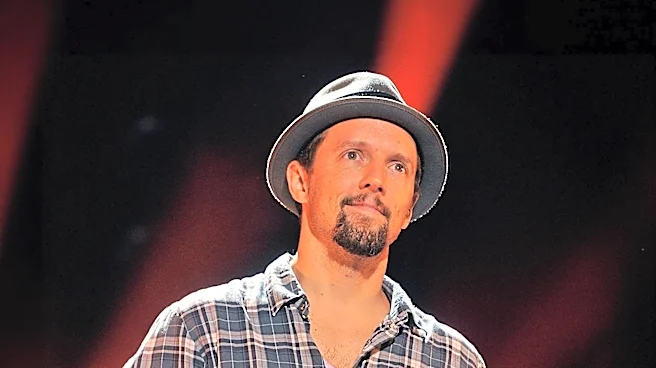
Award-winning singer/songwriter Jason Gray has released his latest album, 'Greatest Hits (Acoustic),' revisiting popular songs like 'Remind Me Who I Am' and 'With Every Act of Love.' In an interview with 'The War Cry,' Gray discussed his nearly two-decade
career in contemporary Christian music, emphasizing the importance of curiosity and authenticity in his artistic process. He highlighted a distinction between art and propaganda, suggesting that true art emerges from an investigation into mystery rather than a predetermined message. Gray cited Paul Simon as an inspiration for his image-driven songwriting, aiming to evoke feeling rather than simply stating facts. He also shared insights into the changing landscape of Christian music, noting a shift from its early days as a youth-focused evangelism tool to its current state, where worship music dominates and there's a risk of prioritizing what 'works' over genuine expression. Gray's son, Kipper, produced the new acoustic album, an experience Gray described as enjoyable and insightful into his son's professional capabilities.
Why It's Important?
Jason Gray's reflections offer a significant commentary on the evolution and challenges within the contemporary Christian music industry. His emphasis on authenticity over 'propagandistic' messaging highlights a tension between artistic integrity and commercial or evangelical objectives. This perspective is crucial for understanding the creative pressures faced by artists in faith-based genres and the potential impact on the quality and depth of their work. The shift he observes, where Christian music's demographic has aged and its role as an evangelism tool has diminished in the eyes of some churches, suggests a broader reevaluation of music's function within religious contexts. Gray's personal journey of healing through music and his commitment to exploring complex themes like brokenness ('The Wound is Where the Light Gets In') underscore music's restorative power beyond its utility as an outreach tool. This discussion is relevant to both artists and consumers within the Christian music sphere, prompting consideration of what constitutes meaningful and impactful artistic expression.
What's Next?
Jason Gray is currently in the final stages of completing a book of devotional essays, which will accompany all the songs he has released throughout his career. This book is expected to go to print imminently. Concurrently, Gray is actively writing new songs for his next record. He revealed that this upcoming album will focus on the theme of the church, stemming from a personal period of disillusionment and subsequent healing from past hurts associated with religious institutions. Each song on the new album will explore the deeper meanings and experiences within church life, such as worship, sermons, and tithing. Gray's aim is to investigate and understand the profound aspects of the Sunday morning experience, suggesting a continued commitment to exploring complex spiritual themes through his music. His 'Greatest Hits (Acoustic)' album is currently available on major streaming platforms and through Centricity Music.
Beyond the Headlines
Gray's insights delve into the ethical and creative dilemmas faced by artists in faith-based industries. His concern about Christian music becoming an 'industry' where creators might 'crack the code' on what works, potentially leading to manipulative or inauthentic output, raises questions about the commercialization of spiritual expression. This tension between artistic purity and market demands is a recurring theme across various creative fields but takes on a unique dimension within religious contexts, where the message often carries profound spiritual weight. His personal journey of overcoming resentment towards the church through songwriting illustrates the therapeutic and transformative power of art, not just for the audience but for the creator themselves. By advocating for curiosity and a willingness to explore what is 'not known,' Gray challenges a potentially rigid theological approach to art, suggesting that genuine spiritual insight can emerge from openness and vulnerability rather than predetermined doctrines. This perspective encourages a broader appreciation for art's role in fostering spiritual growth and healing.