





What's Happening?
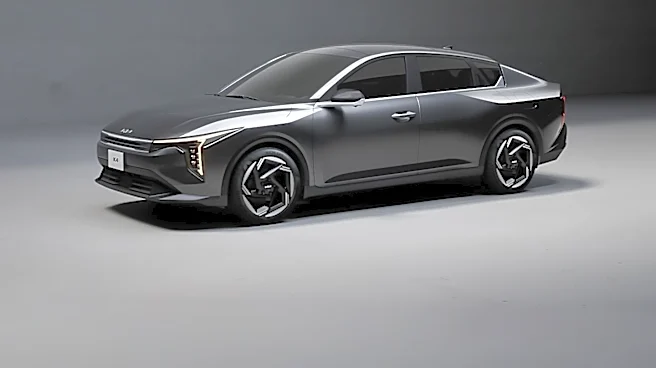
Kia America has launched its new AI Assistant technology, a voice-activated system designed to control car features and answer questions. This advanced system, built on technology including ChatGPT and customized by Kia, debuted in the all-new Kia K4
sedan. The AI Assistant allows drivers to perform various tasks by voice command, such as adjusting climate control, getting answers to general questions, planning trips, and managing in-car entertainment. Users can activate the system by saying, 'Hey, Kia' or by pressing a dedicated button on the steering wheel. This integration aims to enhance the driving experience by providing a more intuitive and interactive interface for vehicle controls and information access.
Why It's Important?
The introduction of Kia's AI Assistant signifies a significant step in automotive technology, moving towards more integrated and conversational in-car systems. This development is important for the U.S. automotive market as it reflects a broader industry trend where manufacturers like VW, BMW, and Mercedes-Benz are incorporating generative AI to create more natural user experiences. For consumers, this technology promises increased convenience, safety, and an overall more enjoyable driving experience by minimizing manual interactions with vehicle controls. It could also influence purchasing decisions, as advanced tech features become a key differentiator in a competitive market. The move positions Kia as a forward-thinking brand in the rapidly evolving landscape of smart vehicles, potentially attracting tech-savvy buyers and setting new expectations for in-car connectivity.
What's Next?
Following its debut in the Kia K4 sedan, it is anticipated that Kia will expand the AI Assistant technology to other models across its lineup. This rollout will likely occur incrementally, with newer or refreshed models being the first to receive the update. Future developments could include further integration with smart home devices, more personalized user profiles, and enhanced predictive capabilities based on driver habits and preferences. The success and user adoption of the AI Assistant in the K4 will likely inform Kia's strategy for broader implementation and future iterations. Competitors will also be closely watching, potentially accelerating their own AI integration efforts to keep pace with evolving consumer expectations for in-car technology.
Beyond the Headlines
The integration of AI assistants like Kia's raises deeper implications regarding data privacy and the future of human-machine interaction in vehicles. As these systems become more sophisticated and collect more data on driver behavior and preferences, questions about data security and how this information is used will become increasingly pertinent. Furthermore, the shift towards voice-controlled interfaces could redefine the driving experience, potentially reducing driver distraction by allowing hands-free operation of various functions, but also introducing new forms of cognitive load. This technology also hints at a future where vehicles are not just modes of transport but intelligent, personalized companions, capable of learning and adapting to individual needs, thereby transforming the very concept of car ownership and interaction.