



What's Happening?
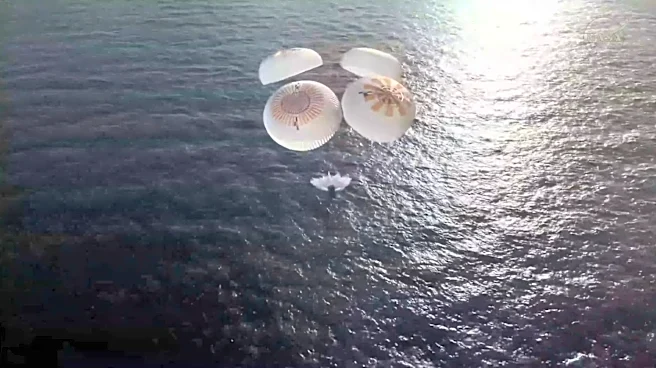
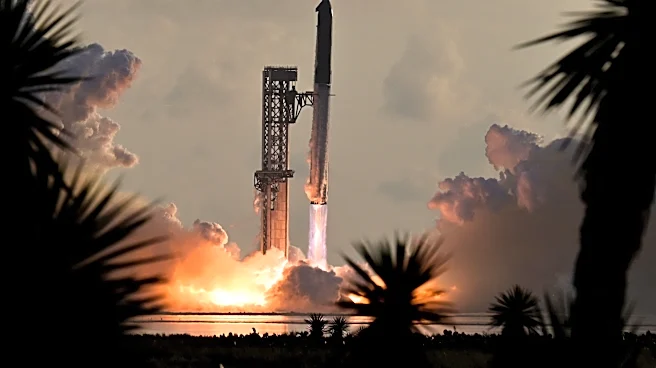
SpaceX initially sold transportation for the first four Axiom missions at a price of $55 million per seat. Axiom Space then sold these missions to its customers at the same $55 million per seat, resulting in Axiom losing money on each mission. This pricing
strategy, which aimed to build long-term customer relationships, led to the departure of Axiom's CEO, Mike Suffredini. Since these initial sales, SpaceX has increased its prices for Crew Dragon missions. Consequently, Axiom Space is no longer able to sell missions at a loss. This development indicates a shift in the economics of commercial crewed spaceflight, with costs for such missions either rising or remaining stable, rather than decreasing significantly as some might have anticipated.
Why It's Important?
The increase in SpaceX's Crew Dragon mission prices has significant implications for the commercial space industry and the broader U.S. economy. For companies like Axiom Space, it means a re-evaluation of their business models and pricing strategies for private space missions, potentially leading to higher costs for customers seeking access to low Earth orbit. This could impact the accessibility of space for private individuals, researchers, and commercial ventures. For SpaceX, the price adjustment suggests a move towards more sustainable profitability for its crewed missions, reflecting the true costs and complexities involved in human-rated spaceflight under NASA requirements. This trend could influence investment decisions in the space sector, as investors assess the viability and profitability of commercial space ventures. It also highlights the challenges of achieving significant cost reductions in crewed space transportation, even with advanced technologies.
What's Next?
The increased pricing for Crew Dragon missions will likely prompt commercial space companies, including Axiom Space, to adjust their offerings and pricing for future private missions. This could involve exploring alternative transportation providers, if available, or developing new strategies to absorb or pass on increased costs to customers. The situation may also encourage further innovation in the development of more cost-effective crewed launch vehicles, as companies seek to make space travel more affordable. Additionally, NASA and other space agencies might need to reassess their budget allocations for future missions involving commercial transportation, as the cost landscape evolves. The long-term impact could be a more competitive market for crewed spaceflight, with a focus on both cost-efficiency and safety.
Beyond the Headlines
This development underscores the inherent tension between the desire for affordable space access and the rigorous safety and operational requirements for human spaceflight. The initial strategy of selling missions at a loss, as pursued by Axiom, highlights the challenges of establishing a new commercial market, where initial investments often outweigh immediate returns. The subsequent price increase by SpaceX suggests a maturation of the commercial crew market, where the true costs of complex operations are becoming more apparent. This situation also raises questions about the role of government agencies like NASA in shaping the commercial space landscape, particularly through their requirements and procurement processes. The balance between fostering innovation, ensuring safety, and achieving economic viability will continue to be a critical factor in the evolution of commercial space travel.