



What's Happening?
STMicroelectronics, a global semiconductor company, anticipates its data center revenue will more than double by 2027, reaching approximately $2.8 billion. This projection represents a significant increase of about $1.5 billion from the expected $1.3
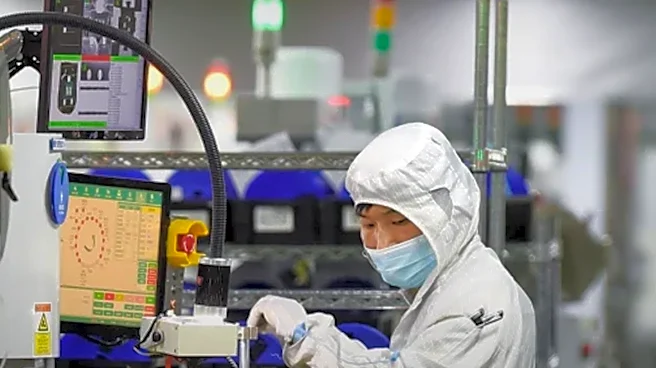
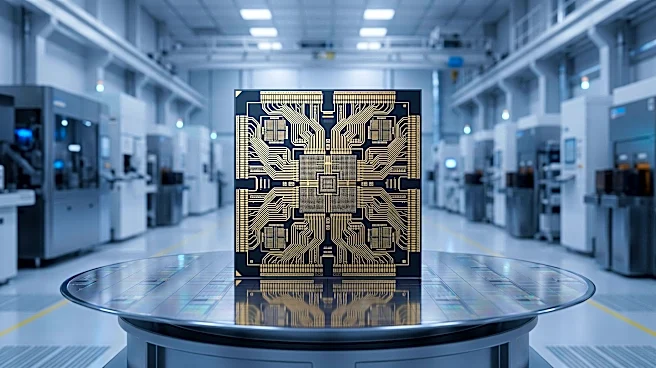
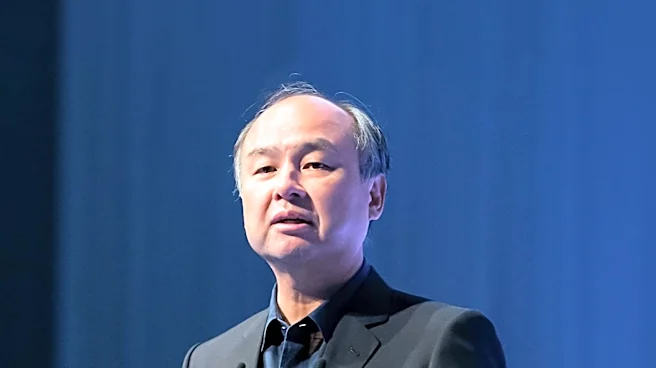
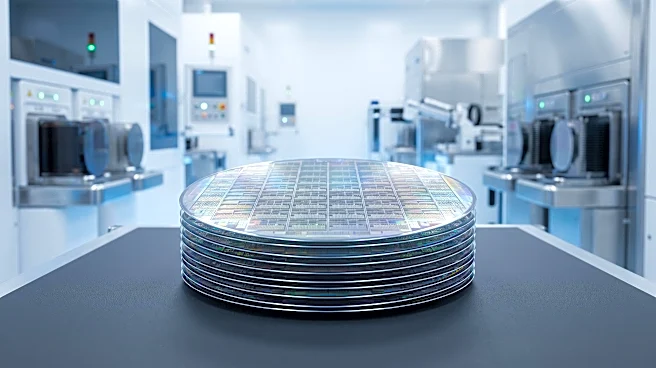
billion in 2026. President and CEO Jean-Marc Chery stated that silicon photonics will be the primary driver of this growth, fueled by the surging demand for AI infrastructure. The company acknowledges that actual demand exceeds this forecast but must account for manufacturing and supply-chain limitations. STMicroelectronics plans to expand its manufacturing capacity at Crolles to potentially 20,000 wafers per week between 2028 and 2030, up from beyond 15,000 wafers per week. Additionally, the Agrate facility is expected to achieve a full build-out of 8,000 wafers per week by 2028. The company will release its 2027 capital spending plans in January.
Why It's Important?
This significant revenue forecast from STMicroelectronics underscores the profound impact of artificial intelligence on the semiconductor industry and the broader U.S. technology sector. The projected growth in data center revenue, particularly driven by silicon photonics, highlights the increasing need for advanced chip technologies to support AI infrastructure. This trend is crucial for U.S. businesses relying on data centers for their operations, as it indicates a robust supply chain for critical components. The expansion of manufacturing capacity in Europe, specifically for 300-millimeter manufacturing, could also influence global semiconductor supply dynamics, potentially easing some pressures on U.S. tech companies. The focus on silicon photonics and microcontrollers for data centers suggests a shift in technological priorities, impacting research and development investments and potentially creating new opportunities for U.S. tech firms specializing in these areas. The company's diversified customer base, with no single customer accounting for more than 30% of revenue, suggests a stable and broad market demand for its products.
What's Next?
STMicroelectronics is set to disclose its 2027 capital spending plans in January, which will provide further insight into its investment strategies for capacity expansion and technological development. The company expects manufacturing flexibility to be limited in 2027 as it implements its reshaping plan. Gross margin is anticipated to remain broadly flat in the first half of 2027 compared to the fourth quarter of the previous year, with improvements expected to accelerate in the second half as data center sales grow and manufacturing efficiencies take effect. The company's long-term goal is to achieve a gross margin of 44% to 46% at an $18 billion revenue run rate, with restructuring benefits materializing progressively in 2028. Industrial revenue is also projected to increase by $1 billion in 2027, driven by demand from data center power and cooling infrastructure, automation, robotics, and power-supply infrastructure. Automotive growth is expected to be limited in the first half of 2027 due to a manufacturing transition at Agrate, accelerating in the second half, with roughly half of the growth coming from silicon carbide products related to electrification.
Beyond the Headlines
The substantial growth in data center revenue for STMicroelectronics, propelled by AI demand, signifies a broader technological transformation impacting various sectors. The emphasis on silicon photonics points to an evolving landscape in data transmission and processing, where optical technologies are becoming increasingly vital for high-speed, energy-efficient data centers. This shift could have long-term implications for the design and architecture of future computing infrastructure, potentially leading to new standards and innovations in data communication. The company's strategic investments in manufacturing capacity, particularly in 300-millimeter technology, highlight the ongoing global competition for semiconductor dominance and the importance of localized production capabilities. Furthermore, the anticipated growth in industrial and automotive sectors, driven by automation, robotics, and vehicle electrification, indicates a convergence of AI and semiconductor technologies across diverse industries, fostering a more interconnected and intelligent global economy. This trend also raises questions about the environmental impact of expanding data centers and the need for sustainable practices in semiconductor manufacturing.