




What's Happening?
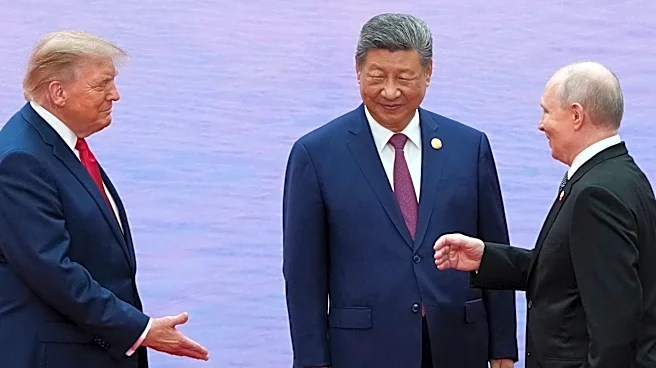
Chinese President Xi Jinping formally opened the Asia-Pacific Economic Cooperation (APEC) meeting in Shenzhen, China, by calling for increased international cooperation on artificial intelligence (AI) and free trade. President Xi emphasized the need to
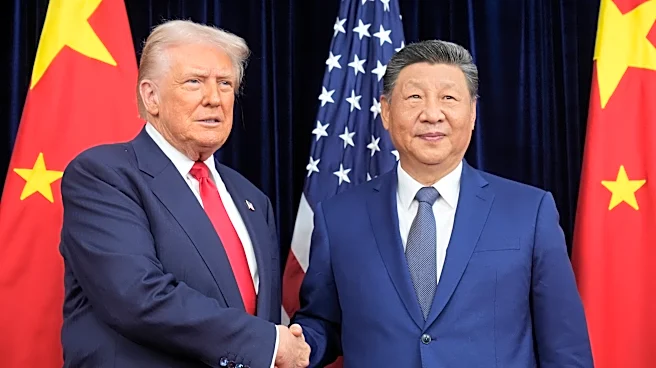
build partnerships for scientific and technological innovation, deepen cooperation in the digital economy and AI, and promote a green and low-carbon transition. He also advocated for the elimination of trade and investment barriers to foster inclusive and balanced development. President Xi stated that China aims to provide a more stable, predictable, and beneficial environment for global enterprises and will continue to expand access in its manufacturing and services sectors through deep-seated reforms, including lowering tariffs and exploring new regulations. This address comes as trade tensions between the U.S. and China persist, with President Trump and President Xi expected to meet during the summit.
Why It's Important?
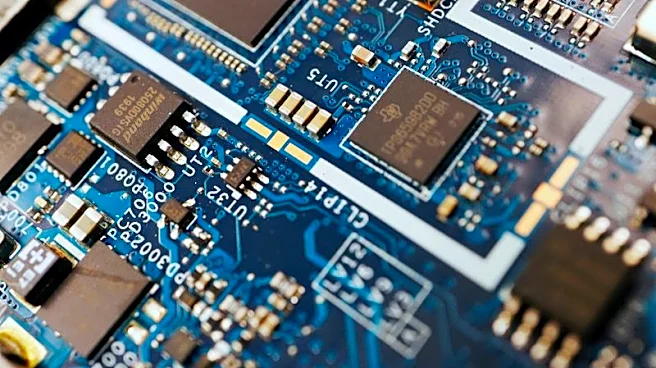
President Xi's call for global cooperation on AI and free trade highlights China's strategic vision for economic development and its role in shaping the international economic order. The emphasis on AI cooperation is particularly significant given the U.S.'s recent imposition of tougher restrictions on advanced semiconductor exports to China, citing national security concerns. These restrictions underscore the growing technological rivalry between the two economic superpowers. President Xi's push for reduced trade barriers and expanded market access could influence global trade policies and potentially alleviate some of the existing trade tensions. The APEC summit serves as a crucial platform for these discussions, with the potential for agreements or disagreements to impact global supply chains, technological innovation, and economic growth. The outcome of these discussions will affect businesses and consumers worldwide, particularly those involved in technology and international trade.
Beyond the Headlines
The convergence of calls for global cooperation with ongoing trade and technology disputes at the APEC summit reveals a complex interplay of economic interdependence and strategic competition. While President Xi advocates for open markets and collaborative innovation, the U.S. is implementing measures to safeguard its technological advantage, particularly in critical areas like AI. This dynamic suggests a future where nations may selectively cooperate in certain sectors while maintaining protective stances in others deemed vital for national security. The discussions at APEC could set precedents for how countries navigate the balance between global economic integration and national interests, potentially leading to new frameworks for international trade and technology governance. The emphasis on AI also raises ethical and regulatory questions about its development and deployment on a global scale.