
What's Happening?
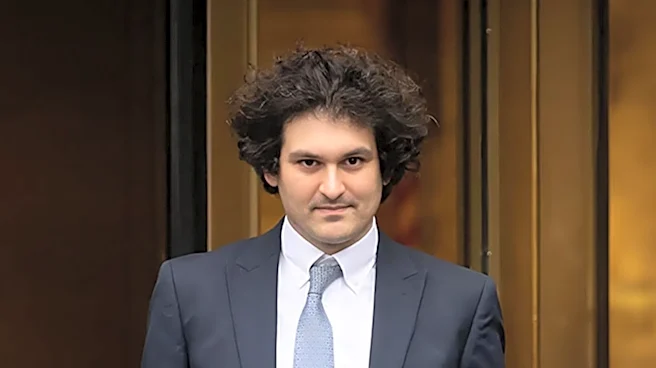
The new Netflix series 'The Altruists,' which dramatizes the collapse of FTX, has drawn significant criticism from key figures in the cryptocurrency industry, including Binance founder Changpeng Zhao (CZ) and Ethereum co-founder Vitalik Buterin. The series,
released on November 19, 2026, adopts the perspective of Sam Bankman-Fried (SBF) and Caroline Ellison, portraying them as idealists. A particular scene has ignited controversy: it depicts CZ pressuring SBF at a networking event to engage in front-running by exploiting client orders. Journalist Nina Bambysheva, in her Forbes critique, noted that there is no public evidence to support this portrayal of CZ. CZ himself has publicly called the scenario 'insane.' Yi He, another Binance executive, reinforced this by stating that FTX's financial deficit exceeded $8 billion even before Binance's withdrawal from the exchange. Vitalik Buterin further escalated the debate on November 21, 2026, criticizing the series for exaggerating CZ's accent and perpetuating what he termed 'racist' stereotypes about foreigners being suspicious.
Why It's Important?
The controversy surrounding 'The Altruists' highlights the ongoing sensitivity and differing narratives surrounding the FTX collapse, one of the most significant fiascos in the crypto sector. The series' fictionalized account, particularly its depiction of CZ, could influence public perception of the events and key players involved, potentially distorting the historical record for a broader audience. This is especially critical as Sam Bankman-Fried, convicted in 2024, awaits a decision on his presidential pardon request, which the U.S. Senate voted against in July 2026. The timing of the series' release, coinciding with these legal developments, fuels debates about the accuracy and responsibility of media portrayals of complex financial and legal events. The strong reactions from prominent figures like CZ and Buterin underscore the crypto community's concern over how its history is being interpreted and presented to the mainstream, potentially affecting trust and understanding of the industry.
What's Next?
The debate ignited by 'The Altruists' is likely to continue within the cryptocurrency community and among broader audiences interested in the FTX saga. Further discussions are anticipated regarding the balance between dramatic license and factual accuracy in historical dramatizations, especially concerning high-profile financial scandals. The series' impact on public opinion could indirectly influence ongoing legal and political discussions surrounding cryptocurrency regulation and accountability. Stakeholders, including other crypto industry leaders and legal experts, may weigh in on the narrative presented by Netflix. Additionally, the controversy might prompt more detailed public statements or analyses from those directly involved in the FTX collapse, aiming to clarify or correct perceived inaccuracies in the series. The ongoing legal status of Sam Bankman-Fried, particularly his pardon request, will remain a focal point, with the series potentially adding another layer to public discourse surrounding his case.
Beyond the Headlines
The controversy surrounding 'The Altruists' extends beyond mere factual disputes, touching upon deeper ethical and cultural implications of media representation. Vitalik Buterin's accusation of 'racist' stereotypes in the portrayal of CZ raises questions about how foreign figures are depicted in Western media, particularly in narratives involving financial wrongdoing. This highlights the potential for fictionalized accounts to perpetuate harmful stereotypes and influence public perception of individuals based on their ethnicity or origin. Furthermore, the series' choice to adopt the perspective of SBF and Caroline Ellison, portraying them as 'idealists,' could be seen as an attempt to humanize or even rationalize their actions, potentially undermining the severity of the financial crimes for which SBF was convicted. This raises ethical concerns about narrative framing in true-crime or true-event dramas and their responsibility to victims and the broader public in accurately reflecting the consequences of such actions. The debate also underscores the ongoing tension between entertainment value and journalistic integrity in dramatized retellings of real-world events.