





What's Happening?
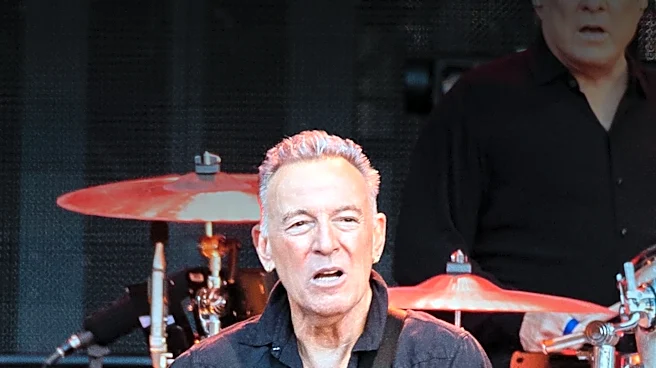
Bruce Springsteen's 1982 album, 'Nebraska,' was a product of significant personal struggle and was heavily influenced by the avant-garde band Suicide, particularly their song 'Frankie Teardrop.' Despite his commercial success with albums like 'The River'
and 'Born in the U.S.A.,' Springsteen considers 'Nebraska' his most cherished work. During its creation, he experienced what he described as his 'first real major depression,' leading him to therapy and a period of intense, solitary work in the studio. This dark period led him to discover Suicide, a band known for its early punk and electronic sounds, which was a departure from his typical musical influences. Springsteen found their music, especially 'Frankie Teardrop,' to be profoundly impactful, describing it as 'one of the most amazing songs' he had ever heard. The morbid and stark themes of Suicide's work resonated with Springsteen's own emotional state, pushing him to explore darker artistic territory beyond his established sound.
Why It's Important?
The creation of 'Nebraska' highlights a pivotal moment in Bruce Springsteen's artistic evolution, demonstrating his willingness to deviate from commercially successful formulas to explore deeper, more personal themes. This album, though not his biggest seller, is significant because it represents a raw, introspective side of 'The Boss' that resonated with critics and a dedicated segment of his fanbase. It showcased how personal adversity and unexpected artistic influences can shape a musician's output, leading to critically acclaimed work that stands apart from mainstream expectations. The album's stark, literary quality influenced subsequent artists and solidified Springsteen's reputation as a profound storyteller, capable of tackling complex human emotions and societal issues. His enduring pride in 'Nebraska' underscores the value artists place on authenticity and personal expression over commercial success, offering a model for artistic integrity in the music industry.
What's Next?
While 'Nebraska' was released decades ago, its influence continues to be felt in discussions about Springsteen's legacy and in the broader music landscape. The album is frequently cited in retrospectives of his career and in analyses of influential American music. For fans, understanding the context of 'Nebraska' provides deeper insight into Springsteen's artistic journey and his capacity for vulnerability. Future documentaries, retrospectives, or academic studies on Springsteen's work will likely continue to highlight 'Nebraska' as a crucial turning point. The album's themes of isolation, despair, and the darker aspects of the American experience remain relevant, ensuring its continued study and appreciation by new generations of musicians and listeners. Springsteen himself continues to advocate for artists like Suicide, suggesting a lasting impact of these influences on his artistic philosophy.
Beyond the Headlines
The story behind 'Nebraska' delves into the often-unseen struggles of highly successful artists and the profound impact of mental health on creative output. Springsteen's candid admission of depression during the album's creation sheds light on the human element behind artistic genius, challenging the perception that success equates to constant happiness. Furthermore, his embrace of Suicide, an underground, avant-garde band, illustrates the permeable boundaries of musical genres and the unexpected sources of inspiration that can drive artistic innovation. This cross-pollination of influences—a mainstream rock icon drawing from experimental punk—underscores the idea that true artistry often transcends conventional categories. It also highlights the role of music as a therapeutic outlet, both for the creator and the listener, in navigating difficult personal periods. 'Nebraska' stands as a testament to the power of art to transform personal pain into universally resonant expression.