







What's Happening?
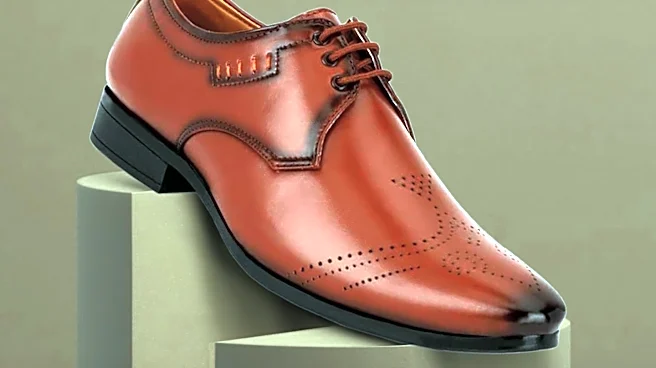
The formality of men's dress shoes is primarily determined by two key characteristics: how they fasten and their finish. Shoes with closed lacing, such as Oxfords, where the lacing is stitched underneath the front, are considered more formal. In contrast,
open lacing, found in Derbies, where the lacing sits on top and spreads apart, indicates a slightly more relaxed style. The finish also plays a crucial role; patent leather is the most formal, reserved for black tie events, while polished leather is suitable for business. Suede, regardless of the shoe style, renders it casual. This classification helps in selecting the appropriate footwear for various occasions, from business meetings to weddings.
Why It's Important?
Understanding the nuances of men's dress shoe formality is crucial for professionals and individuals in the U.S. who navigate diverse social and business environments. Incorrect shoe choice can undermine an outfit's intended message, impacting perceptions in professional settings or at formal events. For industries like fashion retail and personal styling, this detailed classification provides a framework for advising clients and curating appropriate collections. It also influences consumer purchasing decisions, guiding them towards investments in versatile footwear that aligns with their lifestyle and professional needs. The emphasis on specific shoe types for certain occasions underscores the importance of sartorial precision in American culture, where appearance often conveys professionalism and respect.
What's Next?
The established conventions for men's dress shoe formality are likely to remain consistent, as they are rooted in long-standing sartorial traditions. While fashion trends may introduce new materials or slight design variations, the fundamental principles of lacing and finish determining formality are expected to endure. Retailers and brands will continue to educate consumers on these distinctions, ensuring that men can confidently select appropriate footwear. There might be a continued emphasis on versatile shoes that can transition between smart casual and business settings, reflecting evolving workplace dress codes. However, for highly formal events like black tie, the strict adherence to patent leather Oxfords is anticipated to persist.
Beyond the Headlines
The detailed classification of men's dress shoes by formality reflects a deeper cultural code of conduct and social signaling. Beyond mere aesthetics, the choice of footwear communicates respect for an occasion, adherence to social norms, and an understanding of unspoken rules. This sartorial language is particularly potent in professional and formal contexts, where attention to detail can signify diligence and competence. The distinction between closed and open lacing, or patent versus suede, is not arbitrary; it represents a historical evolution of dress codes that have shaped perceptions of elegance and propriety. In a society that increasingly values personal branding, understanding and applying these rules becomes a subtle yet powerful tool for self-presentation and social navigation.