









What's Happening?
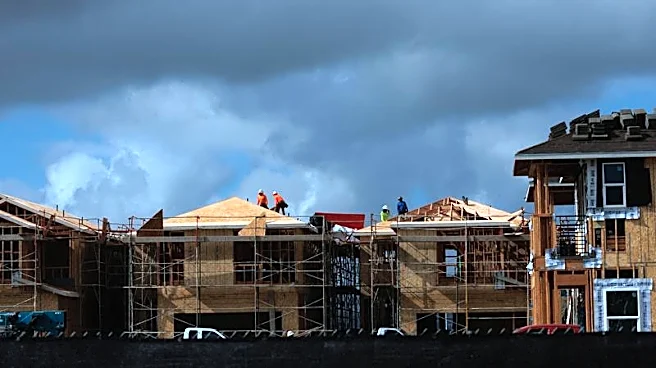
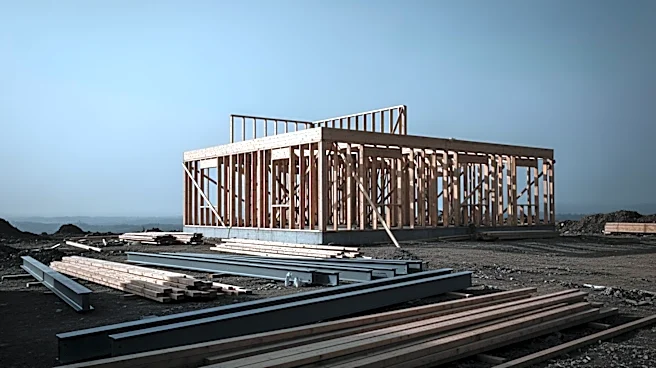
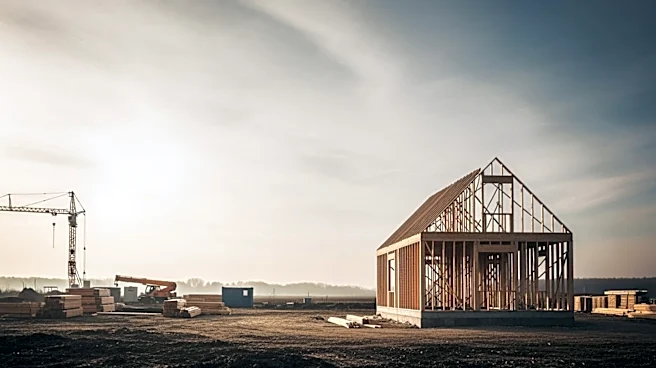
The U.S. Census Bureau reported a decline in single-family home construction in May, with starts falling to a seasonally adjusted annual rate of 882,000, a 1.9% decrease from April. The overall housing starts also dropped significantly, driven by a sharp
decline in the multifamily sector. High borrowing costs, economic uncertainty, and rising material prices are cited as contributing factors. Builders are reportedly cautious, pulling back on speculative homes and focusing on build-to-order projects. The data reflects ongoing challenges in the housing market, including high interest rates and affordability issues.
Why It's Important?
The decline in home construction highlights the ongoing struggles within the U.S. housing market, exacerbated by economic pressures such as high interest rates and material costs. This slowdown affects both the supply of new homes and the broader economy, as construction is a key economic driver. The reduction in new builds could further strain the housing market, impacting affordability and availability for potential homebuyers. Builders' cautious approach may lead to fewer housing options, potentially driving up prices and limiting choices for consumers.
What's Next?
The construction industry's response to these challenges will be critical in shaping the housing market's future. Builders may continue to focus on build-to-order homes, adjusting strategies to mitigate risks associated with speculative building. Policymakers and industry leaders will need to address the underlying economic factors, such as interest rates and material costs, to support a more robust housing market. The situation calls for strategic interventions to balance supply and demand, ensuring housing remains accessible and affordable.