








What's Happening?
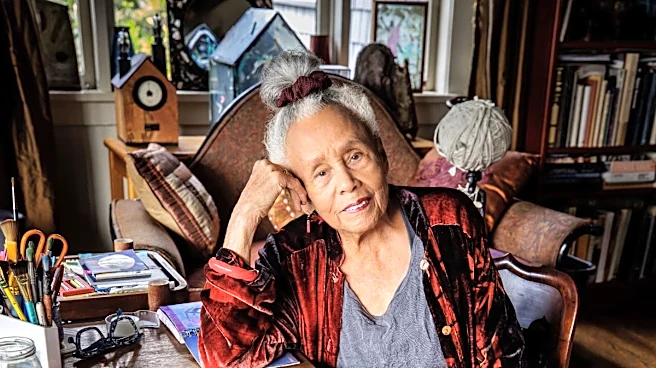
Betye Saar, a leading figure in the Black arts movement, passed away at the age of 99 in Los Angeles. Known for her assemblage art, Saar transformed everyday objects into powerful symbols of Black liberation, notably reclaiming Jim Crow-era memorabilia.
Her work spanned various mediums, including printmaking and film, and often explored themes of family and spirituality. Saar's career began in design before she transitioned to art at 35, continuing to create into her 90s. She was part of a community of Black artists in Altadena and was inspired by Simon Rodia's Watts Towers. Saar's work highlighted consumer culture's depiction of Black Americans, and she was known for her 1972 piece, 'Liberation of Aunt Jemima.'
Why It's Important?
Betye Saar's contributions to art and culture have had a lasting impact on the representation of Black identity and history. Her work challenged and redefined the narrative around Black Americans, using art to confront and transform racist imagery into symbols of empowerment. Saar's influence extends beyond her art, as she mentored a generation of Black artists, including Kerry James Marshall. Her legacy is a testament to the power of art in social and cultural discourse, highlighting the importance of representation and the reclamation of identity in the arts.