


What's Happening?
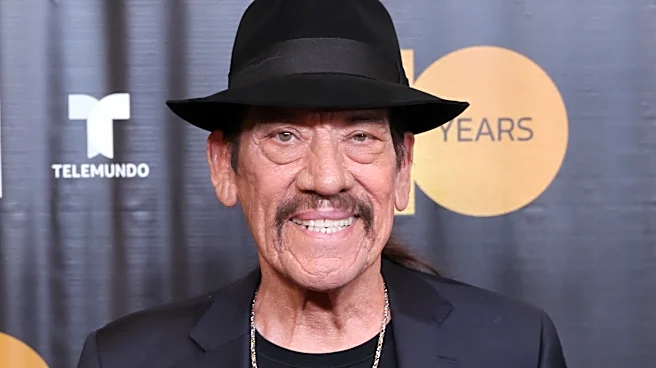
Gilbert Trejo, son of actor Danny Trejo, has stated that his father is contractually obligated to continue his role in 'Pawn Shop,' a film backed by Ben Shapiro's Daily Wire. According to Gilbert, Danny Trejo was unaware of Shapiro's involvement until
two weeks into filming. Gilbert claims his father cannot criticize the film, Shapiro, or withdraw from the project without facing a breach-of-contract lawsuit. Danny Trejo has publicly distanced himself from the film's political implications, asserting he is 'pro-immigrant' and 'not pro-ICE,' and that he took the role solely for acting purposes. The film's synopsis describes a story centered on an ICE officer, which has led to protests and temporary filming suspensions in Livingston, Montana, due to concerns over its subject matter and production practices.
Why It's Important?
This situation highlights the complex intersection of artistic freedom, contractual obligations, and political controversy within the entertainment industry. For Danny Trejo, a prominent Mexican-American actor known for his community advocacy, involvement in a film perceived as 'pro-ICE' has generated significant backlash from his fanbase and community. This controversy could impact his public image and future career choices, as audiences and critics increasingly scrutinize the political leanings of media projects and their participants. For production companies like Daily Wire, the incident underscores the challenges of producing content with strong political themes, potentially leading to community protests and operational disruptions, as seen in Montana. It also raises questions about transparency in film production regarding the involvement of politically charged figures or organizations.
What's Next?
The film 'Pawn Shop' is expected to continue production, albeit under increased scrutiny and potential ongoing protests, particularly given the revised permits and community concerns in Livingston, Montana. Danny Trejo will likely continue to navigate the public relations fallout, potentially issuing further statements to clarify his stance and commitment to his community. The alleged contractual restrictions on Trejo could become a point of legal or public debate, though independent confirmation of these claims is still pending. The controversy may also influence how other actors and crew members approach projects backed by politically aligned media companies, potentially leading to more thorough vetting of production teams and financial backers before signing contracts.
Beyond the Headlines
The incident delves into deeper ethical considerations regarding an artist's responsibility when their work becomes entangled with political narratives that contradict their personal values. It also exposes the power dynamics within the film industry, where contractual agreements can limit an individual's ability to disassociate from a project, even when its political implications become contentious. The backlash against Danny Trejo, despite his stated pro-immigrant stance, reflects a broader societal trend where public figures are increasingly held accountable for their associations, regardless of their intentions. This event could contribute to a growing demand for greater transparency in film financing and production, particularly when projects touch upon sensitive social and political issues, and may encourage artists to exercise more caution in selecting roles and collaborators.