


What's Happening?
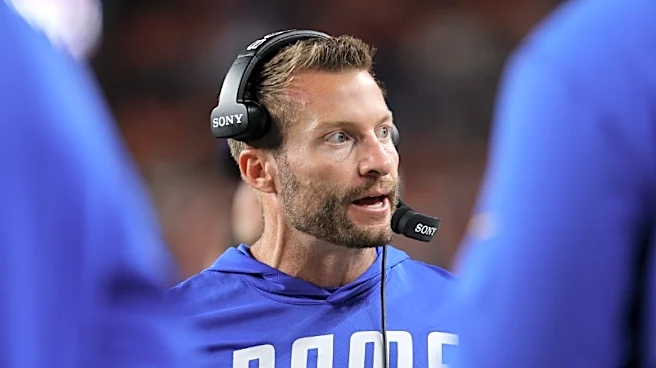
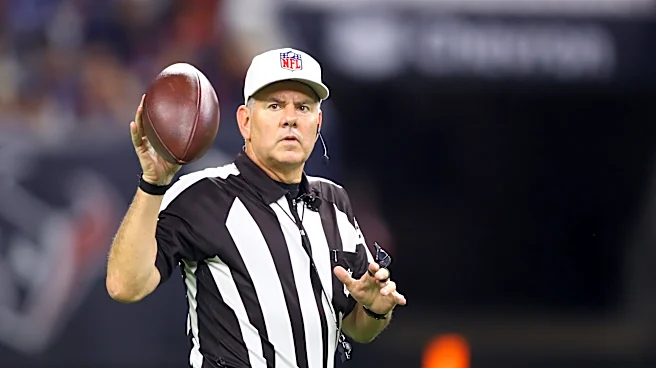
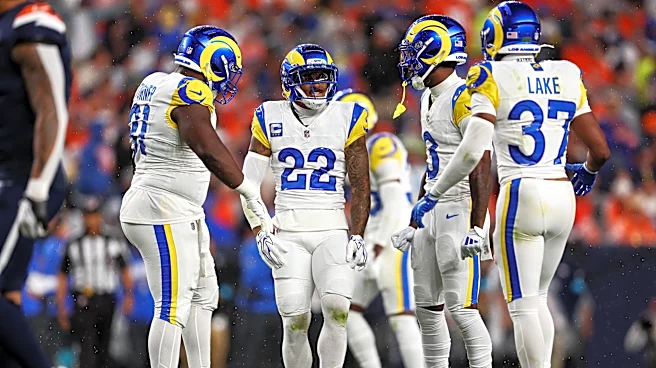
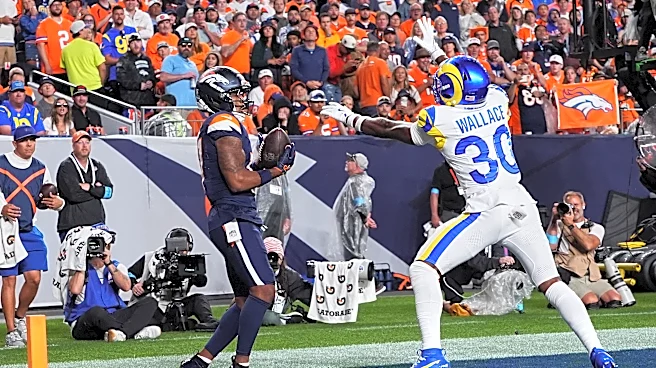
The National Football League (NFL) has informed Los Angeles Rams head coach Sean McVay that officials made a mistake in calling a late pass-interference penalty during the Rams' recent loss to the Denver Broncos. The controversial call occurred with less
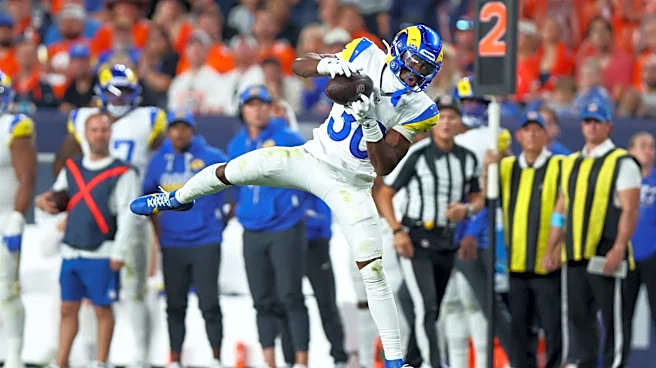
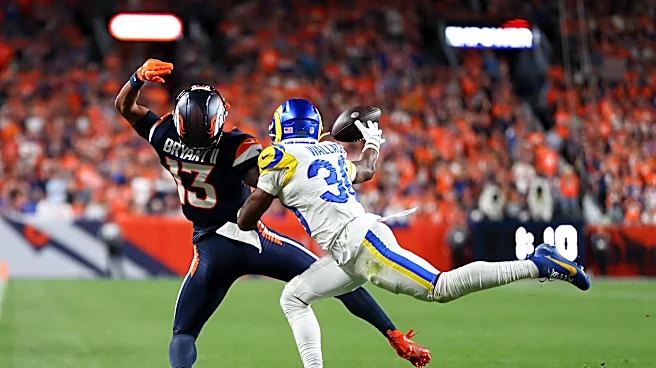
than 1:20 remaining in regulation, when Rams cornerback Josh Wallace intercepted a pass but was flagged for defensive pass interference. This penalty gave the Broncos a first-and-goal opportunity, leading to a go-ahead touchdown by Denver quarterback Bo Nix with 47 seconds left, ultimately resulting in a 30-26 defeat for the Rams. McVay confirmed the NFL's acknowledgment of the error, stating that the goal is to receive consistent feedback and educate players. Despite the admission, McVay emphasized that the Rams, now with a 1-2 record, must move forward and focus on their upcoming game against the Philadelphia Eagles.
Why It's Important?
This incident highlights ongoing debates within the NFL regarding the accuracy and reviewability of pass interference penalties. Such calls can significantly alter the outcome of games, impacting team standings, playoff implications, and financial outcomes for franchises and associated businesses. The NFL's admission of an officiating error, while providing some validation to the Rams, does not change the game's result, underscoring the critical nature of real-time officiating decisions. For fans and sports analysts, it fuels discussions about potential rule changes, such as making pass interference reviewable, to ensure fairness and reduce the impact of human error. The integrity of the game and the perception of fair play are paramount for the league's continued popularity and economic success, making consistent and accurate officiating a key concern for all stakeholders.
What's Next?
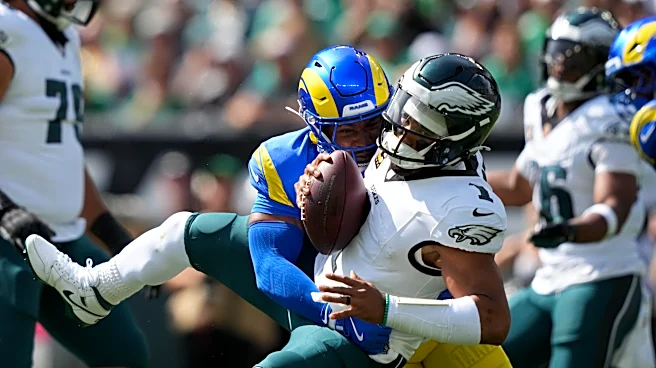
Following the NFL's acknowledgment of the officiating error, the Rams are tasked with quickly moving past the controversial loss and preparing for their next game against the Philadelphia Eagles. Coach McVay has stated the team needs to focus on the future, despite the frustration. The incident is likely to reignite discussions among NFL officials, team owners, and the Players Association about potential adjustments to officiating protocols, particularly concerning pass interference calls. While immediate rule changes are unlikely, the consistent occurrence of such high-impact errors could pressure the league to explore options like expanded replay review for specific penalties. The outcome of future games, especially those with close finishes and contentious calls, will continue to be scrutinized, potentially influencing the pace of any reform efforts.
Beyond the Headlines
The controversy surrounding the pass interference call extends beyond the immediate game result, touching upon the broader ethical and structural challenges within professional sports officiating. The NFL's acknowledgment of error, while a step towards transparency, also exposes the inherent difficulties in officiating high-speed, complex plays under immense pressure. This situation raises questions about the balance between maintaining the flow of the game and ensuring accurate calls, especially when significant financial and emotional investments are at stake. The debate over reviewable penalties reflects a tension between tradition and the desire for technological solutions to minimize human error. Ultimately, such incidents contribute to the ongoing evolution of sports rules and officiating, as leagues strive to maintain competitive integrity while adapting to modern expectations for fairness and accountability.