


What's Happening?
The Washington Nationals are making strategic decisions regarding their young talent, with a clear distinction in their approach to outfielders James Wood and Dylan Crews. According to a report from The Athletic's Spencer Nusbaum, the Nationals consider
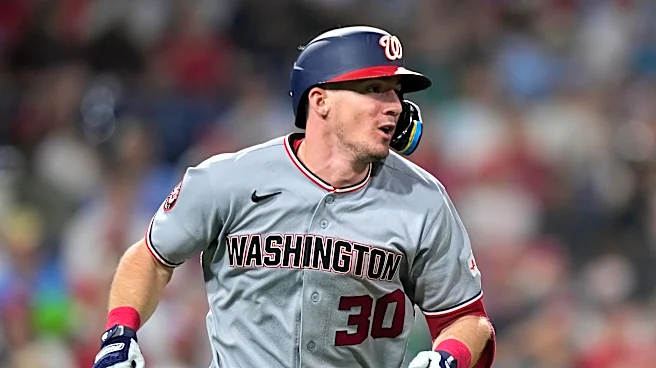
James Wood a foundational player and have no interest in trading him. Wood is regarded as the team's best player and a cornerstone for the franchise's future. In contrast, the team is open to trading Dylan Crews, who was once projected to be a star but has not met those expectations at the MLB level. Crews has emerged as a popular trade target at general managers' meetings, with multiple teams expressing interest. The Nationals have not taken Crews off the table in trade talks, unlike Wood, Cade Cavalli, and Jacob Young, who recently signed a contract extension. Crews' 2026 season saw him hit .223 with 13 homers and a .663 OPS, though he is noted as an above-average fielder and baserunner with potential for untapped upside. The team is reportedly seeking controllable starting pitching in exchange for Crews.
Why It's Important?
This strategic differentiation highlights the Nationals' long-term vision and resource allocation. By designating James Wood as untouchable, the team signals its commitment to building around proven young talent, which can foster stability and a clear identity for the franchise. Conversely, making Dylan Crews available for trade indicates a willingness to reallocate assets to address other team needs, specifically pitching. This move could significantly impact the team's competitive outlook in the crowded NL East. A successful trade for Crews could bring in much-needed controllable starting pitching, which was a target at the previous trade deadline and remains a priority. This could elevate the team's overall performance, as their offense, led by CJ Abrams and James Wood, was one of the league's best in 2026, finishing high in home runs, RBIs, runs scored, and stolen bases. Strengthening the pitching staff would create a more balanced and competitive roster, potentially moving the Nationals closer to contention.
What's Next?
The Nationals will likely continue to engage in trade discussions regarding Dylan Crews as the offseason progresses. With a lockout potentially looming on December 1, any trade involving Crews would ideally need to be finalized in November to avoid delays. If a deal is not struck before a lockout, discussions would be postponed until baseball activities resume. The team's focus will be on acquiring controllable starting pitching, which could involve players with untapped potential and multiple years of team control, similar to Crews' profile. The outcome of these trade talks will shape the Nationals' roster for the upcoming season and influence their ability to compete in the NL East. Meanwhile, James Wood will remain a central figure in the team's plans, with the organization expected to continue building around his talent. The team also needs to address its bullpen and potentially add veteran presence to the rotation, as indicated by their interest in free agents like Nick Pivetta.
Beyond the Headlines
The Nationals' contrasting decisions on Wood and Crews reflect a broader trend in professional sports where teams must constantly evaluate prospects and make tough choices about who to build around and who to leverage for other needs. This situation underscores the unpredictable nature of player development, where highly touted prospects like Crews may not always pan out as expected, while others like Wood quickly establish themselves as core players. The emphasis on 'controllable' pitching in exchange for Crews highlights the increasing value of cost-controlled assets in MLB, allowing teams to manage payroll while maintaining competitive rosters. This strategy also speaks to the importance of a robust player development system, as the Nationals aim to cultivate talent internally while also being pragmatic about external acquisitions. The long-term success of the franchise will depend on how effectively they can integrate these strategic moves into a cohesive plan for sustained competitiveness.