



What's Happening?
General Motors CEO Mary Barra has reiterated the company's long-term strategic focus on electric vehicles (EVs), despite acknowledging that the transition will span decades and that GM will continue to sell gasoline-powered and hybrid models for years.
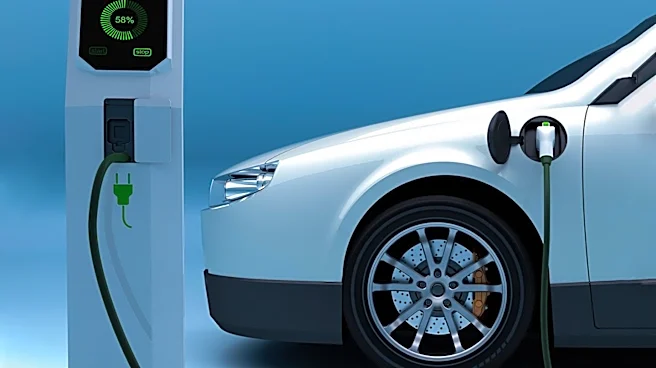
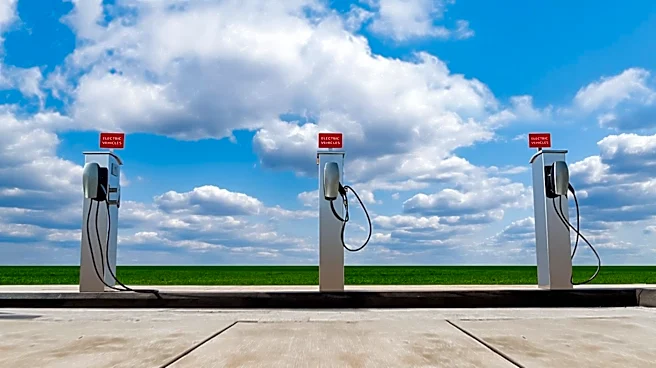
In an interview with Fortune, Barra described EVs as GM's 'end goal' and strategic direction, even with short-term market fluctuations. The automaker projects that EVs could constitute 40-50% of its sales by 2030. GM is actively investing in battery technology, software development, and charging infrastructure, while also planning to develop hybrid models. This dual approach reportedly explains the cancellation of an electric truck program without abandoning the broader electrification strategy. Barra also highlighted charging infrastructure as a significant obstacle, noting that while federal funding has aided expansion, permit delays are slowing the launch of new facilities. Following her statements, GM shares rose, indicating investor confidence in the company's sustained EV strategy.
Why It's Important?
This reaffirmation from GM's leadership is crucial for the U.S. automotive industry and its transition to electric vehicles. It signals that despite recent shifts in consumer demand and regulatory landscapes, a major American automaker remains committed to electrification as its ultimate future. This commitment can influence supply chains, technological innovation, and investment decisions across the sector. For consumers, it suggests that while the pace of EV adoption may vary, the long-term availability and development of electric options from GM are secure. The emphasis on continued hybrid and gasoline vehicle sales during the transition also provides a more flexible pathway for consumers and dealers, potentially mitigating risks associated with a rapid, all-in EV shift. Furthermore, Barra's comments on charging infrastructure underscore a critical bottleneck for widespread EV adoption in the U.S., highlighting the need for continued public and private sector collaboration to build out a robust network.
What's Next?
General Motors is expected to continue its investments in EV technology, including battery development, software, and charging solutions, while simultaneously developing hybrid models to bridge the transition. The company will likely monitor consumer adoption rates and government policies closely, adjusting its timelines and targets as needed. The pace of EV adoption in the U.S. will also depend on the expansion and efficiency of the charging infrastructure, which Barra identified as a key practical obstacle. Stakeholders, including federal and state governments, utility companies, and private charging network providers, will need to address permitting delays and accelerate the deployment of new charging stations. GM's strategy of relying on profitable sales of pickups and SUVs during this transition will also be critical for funding its long-term EV initiatives, suggesting continued focus on these segments in the near term.
Beyond the Headlines
The nuanced approach articulated by GM's CEO reflects a broader recalibration within the automotive industry regarding the pace of electrification. While the long-term vision for EVs remains, the acknowledgment of a multi-decade transition and the continued role of hybrids and gasoline vehicles suggest a more pragmatic, market-driven evolution rather than an abrupt revolution. This could have significant implications for the workforce, requiring retraining and adaptation in manufacturing plants that will produce a mix of powertrains. Ethically, it raises questions about balancing environmental goals with economic realities and consumer preferences. Legally, the uneven nature of U.S. government policy on emissions standards and charging infrastructure, as noted by Barra, highlights the need for more consistent and supportive regulatory frameworks to accelerate the transition. This measured approach might also influence other global automakers, potentially leading to a more diversified product portfolio across the industry as it navigates the complexities of decarbonization.