


What's Happening?
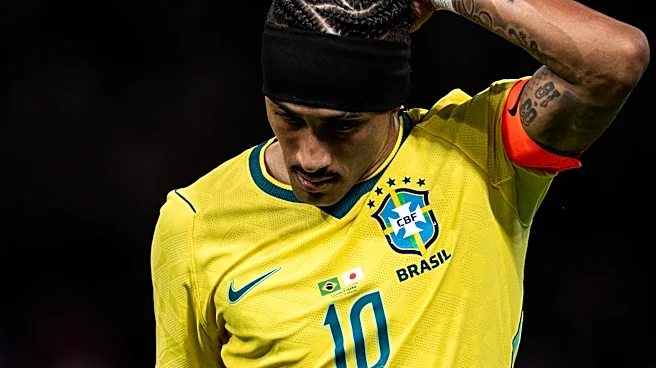
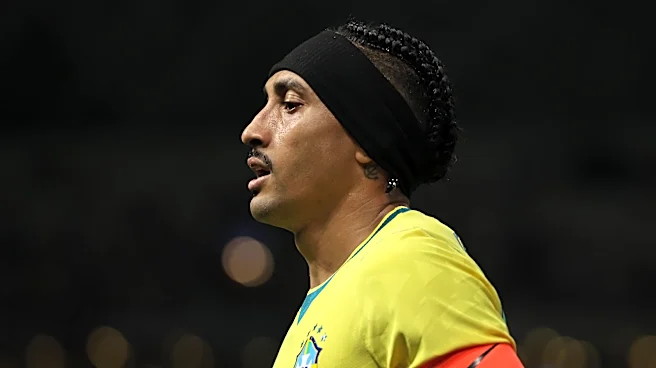
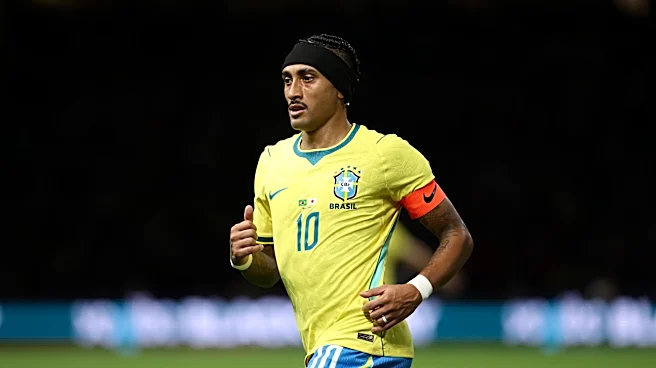
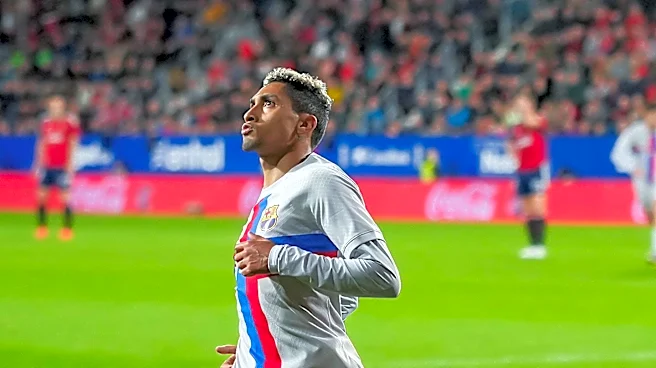
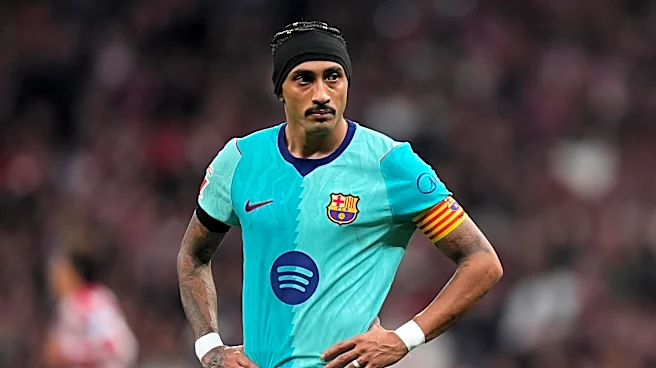
Brazilian footballer Raphinha will not participate in Brazil's upcoming friendly match against Singapore due to a red card received during a recent game against Japan. Despite his suspension, the Brazilian Football Confederation (CBF) has decided to keep
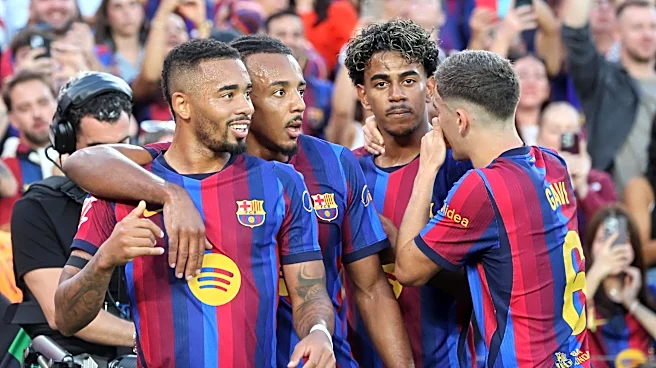
him with the squad in Singapore rather than releasing him early to return to FC Barcelona. This decision means Raphinha will undertake a lengthy journey back from Singapore before FC Barcelona's match against Villarreal. Raphinha was sent off from the bench in the 91st minute of Brazil's 3-2 loss to Japan after protesting a referee's decision. He had already been substituted in the 71st minute. This incident has drawn attention to the relationship between the Brazilian national team and FC Barcelona, particularly concerning Raphinha's workload and injury history.
Why It's Important?
This situation is significant for FC Barcelona, as Raphinha has a history of muscle injuries and concerns about his physical condition. The club has been closely monitoring his workload with the Brazilian national team. While his suspension prevents him from accumulating further playing minutes, Brazil's decision to retain him with the squad means he will spend additional days away from his club. This could impact his recovery and preparation for FC Barcelona's upcoming fixtures, including a crucial LaLiga match against Villarreal. The club's priority is for Raphinha to return fully fit, and any extended travel or time away from the club's medical staff could be a concern, especially given his importance as a key attacker and the team's top scorer.
What's Next?
Raphinha will remain with the Brazilian squad in Singapore until after Tuesday's game, despite his inability to play. He will then embark on a long journey back to Barcelona. FC Barcelona will be closely monitoring his return, hoping he arrives without any new fitness concerns ahead of their LaLiga Matchday 13 fixture against Villarreal. The incident and the CBF's decision may continue to fuel discussions regarding player management between national teams and clubs, particularly for players with a history of injuries. Raphinha has also expressed dissatisfaction with the refereeing in the match against Japan, suggesting potential ongoing scrutiny of officiating standards in international friendlies.
Beyond the Headlines
The incident highlights the complex dynamics between national football federations and professional clubs, especially when star players are involved. Clubs often express concerns about player welfare, injury risks, and workload management during international breaks, while national teams prioritize squad cohesion and leadership. Raphinha's public apology for the red card, coupled with his criticism of the referee, also touches upon the emotional intensity of international football and the pressures players face. His previous comments about not being 'fully fit' during his contract renewal ceremony further underscore the ongoing tension between club and country commitments and the physical demands placed on elite athletes.