




What's Happening?
BMW is currently experiencing a cyclical earnings trough, with its LTM (Last Twelve Months) revenue declining by 7.5% year-over-year to €126.2 billion and net income falling by 13.3% to €6.1 billion. The company's Automotive segment generated €111.4 billion of
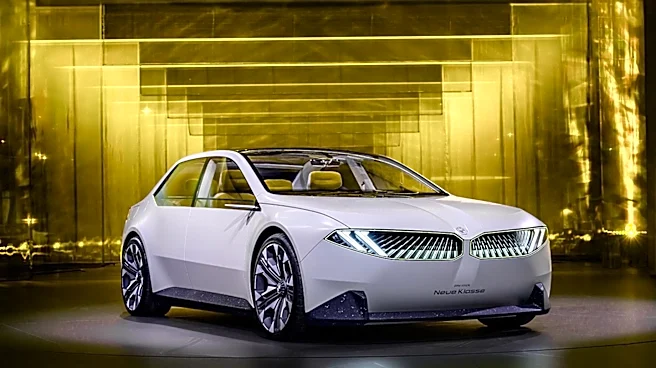
this revenue, while Financial Services contributed €40.2 billion before group eliminations. Despite these declines, BMW aims to achieve a more resilient premium-auto profile over the next three years. This strategy hinges on the successful rollout of its 'Neue Klasse' vehicles, which are expected to stabilize volumes in the Chinese market, and the flexibility of its manufacturing plants to support both internal combustion engine (ICE) and fully electric vehicles. Management has set a 2028 Automotive EBIT-margin target of 3% to 5%, indicating a focus on structural measures and cost savings. The company also confirmed over €2.5 billion in free cash flow for 2026 and an operational EBIT margin above 2%.
Why It's Important?
This period is critical for BMW as it seeks to adapt to evolving market dynamics, particularly the shift towards electric vehicles and the volatility of the Chinese market. The 'Neue Klasse' initiative represents a significant investment in future technology and brand positioning, aiming to secure BMW's competitive edge in the premium automotive sector. The company's ability to stabilize Chinese volumes, a key market, will directly impact its global sales and profitability. Furthermore, the emphasis on flexible manufacturing plants allows BMW to respond to varying regional adoption rates of electric vehicles, mitigating risks associated with a rapid, uniform transition. The stated EBIT-margin target and free cash flow projections are crucial indicators for investors, signaling management's confidence in its restructuring and technological advancements to drive future financial performance. The success of these strategies will influence not only BMW's standing but also broader trends in the automotive industry regarding electrification and market adaptation.
What's Next?
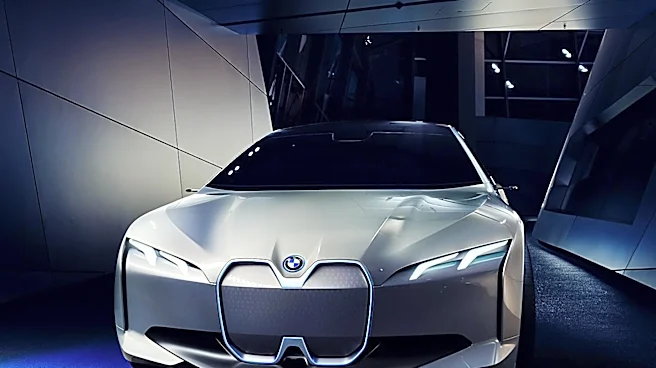
BMW's immediate future will be defined by the rollout of its 'Neue Klasse' vehicles, including the iX3, i3, and iX5, which are anticipated to help stabilize volumes, particularly in the Chinese market. The company's European plants are designed to produce both ICE and fully electric vehicles, offering a technology-agnostic approach to production. Management's focus on structural measures and accelerated execution is expected to contribute to lasting cost savings and support the 2028 Automotive EBIT-margin target of 3% to 5%. Investors will be closely watching for improvements in revenue and net income, as well as the sustainability of capital returns, which have been impacted by the cyclical earnings decline. Consensus revisions have shown negative adjustments to FY2026, FY2027, and FY2028 net-income estimates, suggesting that the market is cautiously optimistic about the pace of BMW's recovery and the effectiveness of its strategic initiatives.
Beyond the Headlines
The challenges faced by BMW extend beyond immediate financial metrics, touching upon broader industry shifts and ethical considerations. The weakening residual values of ICE vehicles and the stabilization of EV residual values in certain regions highlight a significant risk for BMW's Financial Services segment, which relies on the resale market. This trend underscores the need for robust strategies to manage the transition to electric vehicles, including battery life and recycling, to maintain asset values. The volatility of the Chinese market, described by management as having fallen by over 20%, also presents a geopolitical and economic risk, emphasizing the importance of diversified market strategies. Furthermore, the potential for 'Neue Klasse' products to be less profitable than existing models, especially if BMW competes on price, raises questions about the long-term sustainability of premium positioning in an increasingly competitive EV landscape. These factors collectively point to a complex future where technological innovation must be balanced with market realities and financial prudence.