





What's Happening?
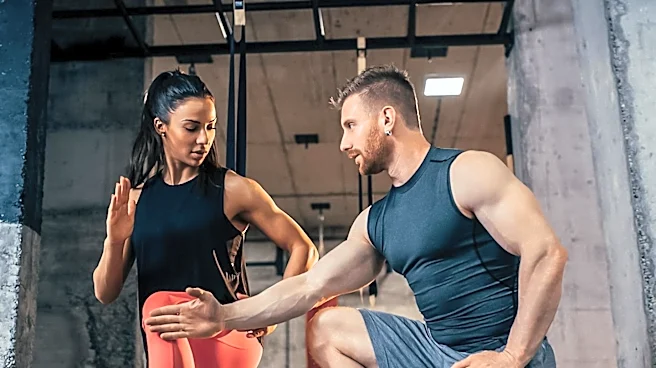
A significant shift is occurring in the fitness culture, particularly among millennials, moving away from traditional bodybuilding towards hybrid training. This new approach emphasizes a more comprehensive definition of fitness, integrating strength,
endurance, power, mobility, and coordination. Many individuals who previously focused solely on aesthetics and muscle mass are now seeking training that improves overall physical capability and quality of life. This change is driven by a desire to avoid burnout, address neglected fitness qualities like cardiovascular health and mobility, and build a body that performs well in diverse real-world scenarios, not just in the gym. Run clubs and Hyrox competitions are gaining popularity, reflecting this evolving mindset.
Why It's Important?
This shift in fitness trends holds significant implications for the U.S. health and wellness industry. Gyms and fitness professionals will need to adapt their programming and marketing to cater to the growing demand for hybrid training. This could lead to an increase in multi-disciplinary fitness facilities, specialized coaching, and a broader range of equipment. For supplement and apparel companies, there may be a shift in focus from purely muscle-building products to those supporting endurance, recovery, and overall performance. The emphasis on functional fitness and longevity could also influence public health initiatives, promoting more holistic approaches to physical activity. This movement suggests a more mature understanding of health, where capability and resilience are valued alongside appearance, potentially leading to a healthier and more active population in the long term.
What's Next?
The hybrid training movement is expected to continue gaining momentum, with more individuals seeking balanced fitness routines. Fitness brands and trainers will likely develop more integrated programs that combine various disciplines like strength training, cardio, and mobility work. There could be an increase in demand for wearable technology that tracks diverse fitness metrics, not just steps or calories. Educational resources, such as podcasts and online courses, focusing on comprehensive fitness principles are also likely to proliferate. As this trend matures, it may lead to new certifications for fitness professionals and a re-evaluation of what constitutes 'peak' physical condition, moving beyond purely aesthetic benchmarks to include functional performance and long-term health.
Beyond the Headlines
Beyond the immediate impact on the fitness industry, the rise of hybrid training reflects a deeper cultural shift towards valuing holistic well-being and sustainability. It challenges the long-held notion that fitness is solely about appearance or extreme specialization. This evolution suggests a more mindful approach to physical health, where individuals are seeking to optimize their bodies for a lifetime of activity rather than short-term aesthetic goals. This could have broader societal benefits, including reduced healthcare costs associated with sedentary lifestyles and improved mental well-being through diverse and engaging physical activities. The movement also highlights the importance of adaptability and resilience, qualities that are increasingly valued in modern life.