
What's Happening?
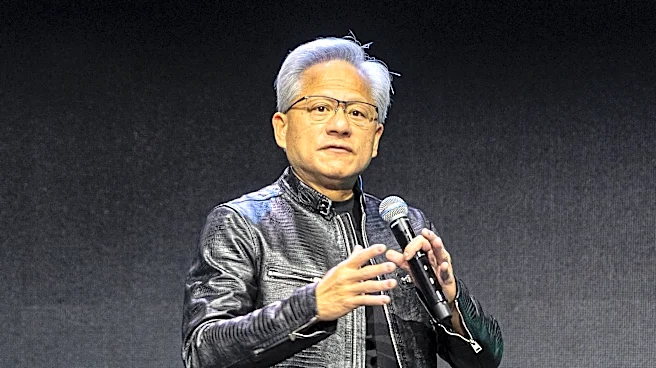
Alex Kantrowitz, founder of Big Technology and a CNBC contributor, has released a solo episode discussing the return of Jensen Huang as Nvidia's CEO. This development is being analyzed for its potential
impact on Nvidia's market position and the broader landscape of Artificial Intelligence (AI) in both the United States and China. Kantrowitz's commentary highlights the significance of leadership stability at Nvidia, a company crucial for supplying the majority of AI chips globally. The discussion touches upon the implications for buyers, investors, and policymakers in the AI sector, emphasizing that leadership changes at such a pivotal company can have far-reaching effects on the industry's trajectory and geopolitical dynamics.
Why It's Important?
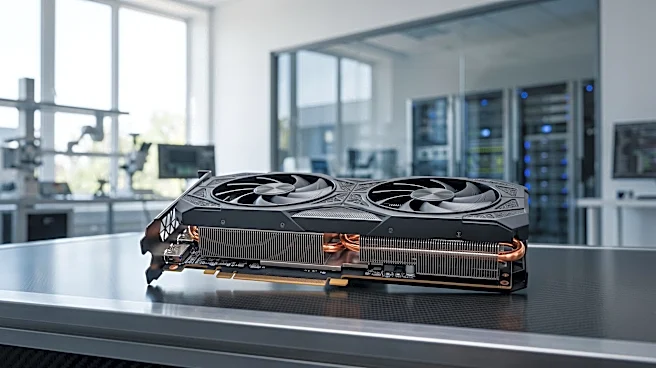
The return of Jensen Huang to Nvidia's leadership is a critical event due to Nvidia's dominant role in the AI chip market. Nvidia's technology underpins much of the current AI development, making its leadership and strategic direction highly influential. Any instability or significant change at the helm of Nvidia can create ripple effects across the U.S. technology sector, impacting companies reliant on its hardware for AI research, development, and deployment. Furthermore, the discussion extends to the competitive landscape between the U.S. and China in AI, where access to advanced chips is a key factor. Changes in Nvidia's leadership could alter supply chains, investment patterns, and national AI strategies, affecting economic stakeholders and policymakers concerned with technological supremacy and national security.
What's Next?
The immediate future will likely involve close observation of Nvidia's strategic announcements and market performance under Jensen Huang's renewed leadership. Investors and industry analysts will be looking for clarity on the company's long-term plans, particularly concerning chip production, AI research investments, and its approach to international markets, especially China. Policymakers in the U.S. and China will continue to monitor Nvidia's role in the global AI supply chain, potentially adjusting export controls or domestic investment strategies based on perceived shifts in market dynamics. The broader AI community will also be keen to see how Nvidia's stability or changes in direction influence the pace and nature of AI innovation.
Beyond the Headlines
Beyond the immediate market and policy implications, Jensen Huang's return could signify deeper trends within the technology industry regarding founder-led companies and the value placed on experienced leadership in rapidly evolving sectors like AI. It raises questions about the sustainability of innovation and market dominance in the face of intense competition and geopolitical pressures. The narrative also underscores the ethical and strategic considerations surrounding AI development, particularly the dual-use nature of advanced computing power and its implications for national security and international relations. The ongoing interplay between corporate leadership, technological advancement, and governmental policy in the AI space will continue to shape the future of global technology and economic power.