





What's Happening?
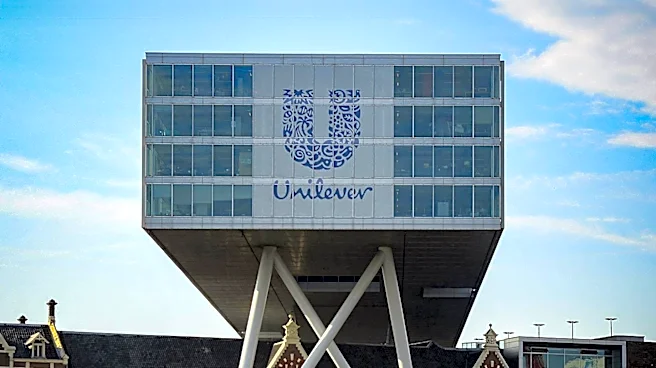
Unilever (LSE:ULVR) is currently under scrutiny due to two separate competition-related issues in the UK. One investigation involves allegations of a fragrance supplier cartel resisting Unilever's price cuts, while the other is linked to McCormick & Company's
proposed remedies for its acquisition of Unilever Foods. These developments come after a period of strong performance for Unilever's share price, which has seen a 5.81% return over the past 7 days, a 5.99% return over 90 days, and an 8.28% total shareholder return over the last year. Despite this recent momentum, some investors and analysts, including those in the Simply Wall St Community, believe the company's stock may be overvalued. The narrative fair value is assessed at £42.28, significantly below its recent closing price of £50.62, suggesting a potential overvaluation of approximately 19.7%.
Why It's Important?
The competition headlines and subsequent overvaluation concerns are significant for Unilever and its investors. The ongoing investigations could lead to regulatory actions, fines, or mandated changes in business practices, potentially impacting the company's profitability and market position. For McCormick & Company, the proposed remedies for acquiring Unilever Foods are crucial for the successful completion of the deal, and any complications could delay or even jeopardize the acquisition. The debate over Unilever's valuation highlights a divergence in investor sentiment: some see the recent share price strength as a recognition of the company's earnings power, while others believe the sentiment has outpaced the underlying business value. This uncertainty can affect investor confidence and potentially lead to stock price volatility, impacting shareholders and future investment decisions in the consumer staples sector.
What's Next?
The immediate next steps for Unilever will likely involve navigating the ongoing UK competition investigations. The company will need to cooperate with regulators regarding the alleged fragrance supplier cartel and address any concerns related to McCormick's acquisition of Unilever Foods. The planned demerger of Unilever's food businesses is a key strategic move aimed at allowing the company to focus more on its core consumer staples operations, potentially leading to a more efficient business. The success of this restructuring will be closely watched by investors, as it is a significant factor in the long-term valuation of the company. Any disruptions to this demerger or a weakening of pricing power in Unilever's core brands could quickly erode investor confidence and further impact its perceived fair value. The market will be observing how these competition issues and restructuring efforts unfold.
Beyond the Headlines
Beyond the immediate financial implications, these competition issues highlight broader themes within the consumer goods industry, particularly concerning market power and pricing strategies. The alleged fragrance supplier cartel points to potential anti-competitive practices that could affect the entire supply chain and ultimately impact consumer prices. For Unilever, a company with significant market presence, navigating these challenges while undergoing a major business restructuring underscores the complexities of maintaining competitive advantage in a highly regulated environment. The situation also brings to light the ongoing tension between market sentiment-driven stock performance and fundamental business valuation, prompting a deeper look into how external factors like regulatory scrutiny can influence investor perception and long-term corporate strategy. The outcome of these investigations could set precedents for how large multinational corporations operate within competitive markets.