





What's Happening?
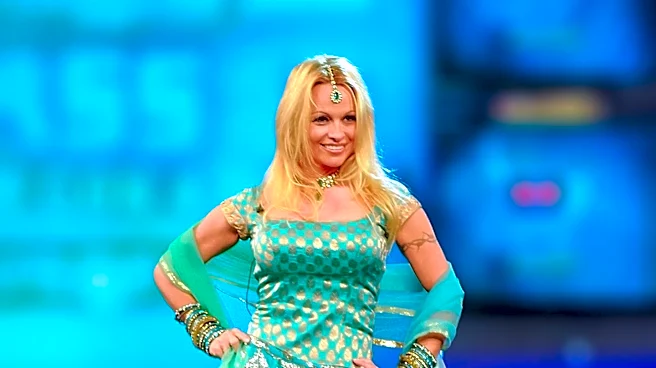
The uncensored version of 'The Comedy Central Roast of Pamela Anderson,' which aired in 2005, showcased a no-holds-barred comedic event where model and actress Pamela Anderson was the subject of numerous jokes and playful insults. Hosted by Jimmy Kimmel,
the roast featured a lineup of comedians and celebrities, including Sarah Silverman and a 'Golden Girl' who reportedly described sex acts. The event was characterized by its edgy humor, with 'boob jokes' being a prominent feature, and even included heckling from Courtney Love, who was described as 'absolutely sober.' The roast aimed to deliver 'total roast mayhem,' with participants humorously 'beach-slapping' the 'swimsuit queen.'
Why It's Important?
The uncensored 'Comedy Central Roast of Pamela Anderson' holds significance as a cultural snapshot of early 2000s celebrity culture and comedic trends. The event's willingness to push boundaries with explicit content, including 'boob jokes' and sexual references, reflects a particular era of shock humor that was popular on television. It highlights the public's appetite for seeing celebrities in a vulnerable, yet humorous, light, and the role of roasts in both celebrating and satirizing public figures. The participation of prominent comedians like Jimmy Kimmel and Sarah Silverman underscores their influence in shaping the comedic landscape of the time. For Pamela Anderson, her involvement in such an event demonstrated a level of self-awareness and willingness to engage with her public image, even if it meant being the target of often provocative humor. This type of programming also contributed to Comedy Central's brand as a network known for its irreverent and uncensored content.
What's Next?
While the uncensored roast is a historical event, its impact on the evolution of comedic specials and celebrity interactions continues to be felt. The format of celebrity roasts has persisted, albeit with adaptations to changing social norms and audience expectations. Future comedic events may continue to explore the boundaries of humor, but with increased awareness of sensitivity and inclusivity. For Pamela Anderson, this roast is a part of her extensive public narrative, which has since evolved to include award-nominated acting and a more natural public persona. Her later career choices suggest a move towards more serious artistic endeavors and a redefinition of her public image, contrasting with the highly sexualized and objectified portrayal often seen in such roasts. The legacy of this roast serves as a reference point for discussions about freedom of speech in comedy and the evolving relationship between celebrities and the media.
Beyond the Headlines
The uncensored nature of 'The Comedy Central Roast of Pamela Anderson' raises deeper questions about the ethics of humor, particularly when it targets a public figure's physical appearance and personal life. The prevalence of 'boob jokes' and other sexually explicit content, while framed as comedy, can contribute to the objectification of women in media. This event, like many roasts of its time, reflects a societal comfort with humor that often bordered on crude or offensive, particularly towards women. It prompts reflection on how such content shapes public perception and whether it empowers or disempowers the subject. The roast also highlights the complex relationship between celebrities and their public image, where participation in such events can be a strategic move to control or redefine their narrative, even if it means enduring harsh criticism. Ultimately, it serves as a historical example for examining the evolution of comedic standards and the ongoing dialogue about respect and representation in entertainment.