




What's Happening?
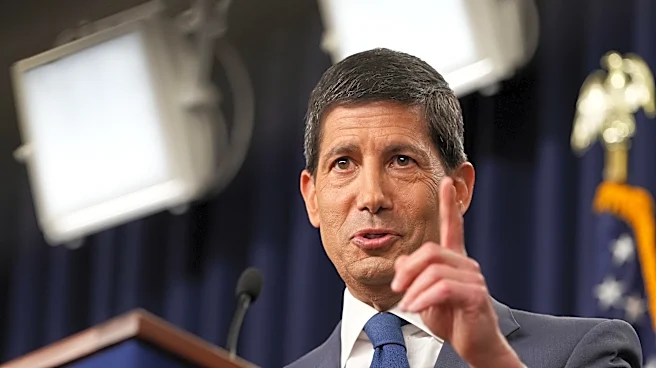
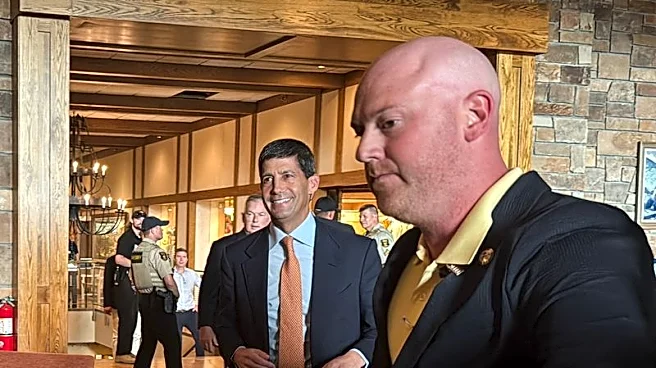
Fed Chair Kevin Warsh delivered his first major address at the Kansas City Fed's Jackson Hole Economic Policy Symposium, highlighting that the core Personal Consumption Expenditures (PCE) inflation remains significantly above the Federal Reserve's 2%
target. As of August 30, 2026, PCE inflation was reported at 3.7% over the past 12 months and 4.1% over the past six months. Warsh emphasized the necessity for the Fed to be confident that inflation is moving towards the target 'clearly and at sufficient speed,' indicating that 'otherwise, we have work to do.' While he avoided committing to a specific rate path, consistent with his preference to reduce reliance on forward guidance, financial markets and media widely interpreted his remarks as hawkish. This has led some analysts to anticipate an increased likelihood of a rate hike, rather than a prolonged hold on current rates, as previously expected.
Why It's Important?
The Federal Reserve's stance on inflation, as articulated by Chair Warsh, is crucial for the U.S. economy. The persistent elevation of PCE inflation above the 2% target suggests that the cost of living continues to rise, impacting household purchasing power and potentially leading to a decrease in real wages for many Americans. A hawkish interpretation of Warsh's speech implies that the Fed may be prepared to implement further interest rate increases to curb inflation. Such a move would directly affect borrowing costs for businesses and consumers, potentially slowing economic growth, impacting investment decisions, and increasing the cost of mortgages, car loans, and credit card balances. This could lead to a 'K-shaped' economic impact, where those with substantial assets or fixed-rate loans are less affected, while renters, lower-income households, and those with variable-rate debt face increased financial strain. The Fed's actions are critical in managing economic stability and preventing inflation from becoming entrenched.
What's Next?
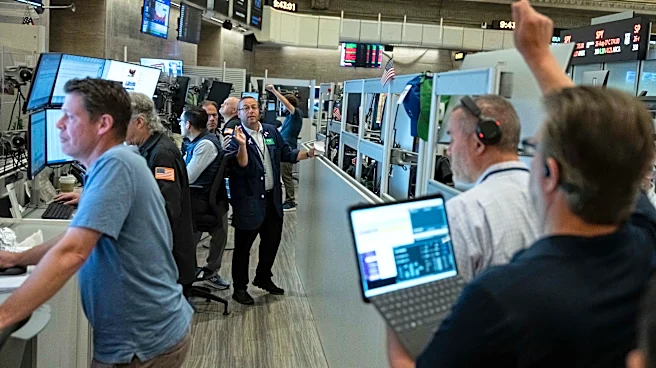
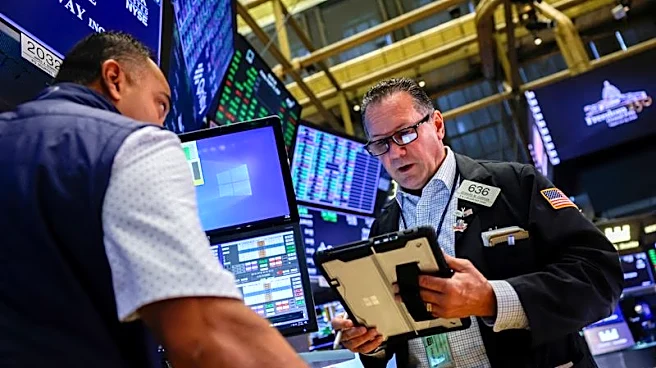
Following Fed Chair Warsh's address, financial markets will closely monitor upcoming economic data, particularly inflation reports and employment figures, for further indications of the Federal Reserve's next policy moves. The market's reassessment of policy tightening scenarios suggests that investors are now pricing in a higher probability of a rate hike. Businesses and consumers should prepare for potentially higher borrowing costs, which could influence investment strategies, consumer spending habits, and overall economic activity. The Federal Reserve's future communications will be scrutinized for any shifts in its commitment to bringing inflation down to the 2% target. The central bank's emphasis on active policy flexibility means that future decisions will be data-dependent, with a strong focus on inflation trends and labor market conditions.
Beyond the Headlines
The divergence between aggregate economic indicators and public sentiment, often termed the 'Vibecession,' highlights a deeper societal challenge. While official data, such as low unemployment and strong business investment, suggest a robust economy, many households perceive a decline in their financial well-being due to accumulated price increases. This disconnect underscores that economic policy, while effective in managing aggregate metrics like inflation, may not uniformly address the lived experiences of all Americans. The 'K-shaped' economic recovery, where different segments of the population experience vastly different outcomes, suggests that broad economic measures can mask significant disparities. The Fed's focus on inflation, while necessary for overall economic stability, must also consider the varied impacts of its policies on different household balance sheets and the potential for widening economic inequality.