






What's Happening?
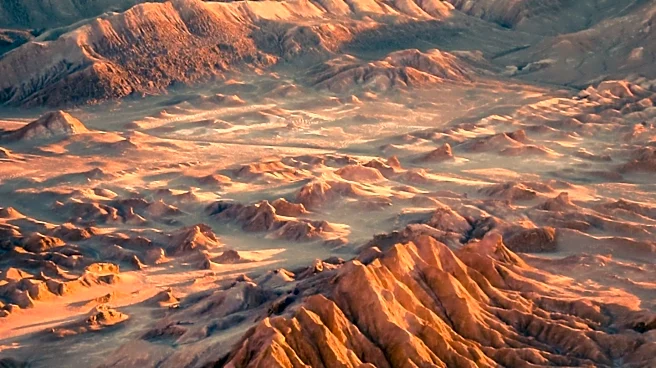
Peter Thiel, chairman of Palantir and a hedge fund owner, has acquired a 1% stake, valued at $76 million, in Vista, a prominent shale producer operating in Argentina's Vaca Muerta formation. This investment highlights the growing recognition of Vaca Muerta as the world's
second-largest shale oil and gas deposit. The purchase, made in American depositary shares, follows a meeting between Thiel and Argentina's President Javier Milei, where economic policies and opposition to wealth taxes were discussed. Vista currently produces approximately 160,000 barrels of oil equivalent daily and has invested over $6.5 billion in the Vaca Muerta play, with further investment plans. This move by Thiel underscores the increasing interest from major investors and oil companies in the region, which is experiencing a significant boom in oil and gas production. Crude oil output in Vaca Muerta reached an all-time high of 887,227 barrels per day in May, a 19% increase from the previous year, while natural gas production also saw a rise to 5.5 billion cubic feet per day.
Why It's Important?
Thiel's substantial investment in Argentina's Vaca Muerta shale is a significant indicator of the formation's potential to become a major global energy source. This influx of capital, particularly from a high-profile investor like Thiel, can attract further foreign direct investment into Argentina's energy sector, potentially boosting its economic stability. The Vaca Muerta play has already enabled Argentina to surpass Colombia as Latin America's fourth-largest oil producer, and continued investment could elevate this position further. The development of this shale resource is crucial for Argentina's government, which is actively prioritizing the energy industry and encouraging infrastructure projects to enhance Vaca Muerta's output capacity. The global energy crunch has amplified the strategic importance of Vaca Muerta, positioning Argentina as a key player in the international oil and gas market. The long-term impact could include increased energy independence for Argentina and a more diversified global energy supply, benefiting consumers and industries worldwide.
What's Next?
The investment by Peter Thiel is expected to catalyze further development and investment in the Vaca Muerta shale formation. Analysts project that oil production in Vaca Muerta could reach between 1 million and 1.5 million barrels daily by 2030, driven by continued investments from both local state major YPF and international Big Oil companies. The Argentinian government is likely to continue its efforts to attract data center investors, leveraging the region's vast open spaces and cool climate, with readily available oil and gas being a critical factor for these operations. The focus will remain on infrastructure development to support the increased output and export capabilities of Vaca Muerta. The success of these initiatives could significantly bolster Argentina's economy, although the broader economic benefits are still in the early stages of materializing. International companies are being offered attractive entry points into Vaca Muerta, with bid terms designed to draw in operators with North American shale expertise, suggesting a sustained period of growth and expansion.
Beyond the Headlines
Thiel's investment extends beyond mere financial gain; it reflects a broader geopolitical and economic strategy. His meeting with President Milei, discussing economic policies and opposition to wealth taxes, suggests an alignment with Milei's libertarian economic agenda, which aims to attract foreign capital by reducing government intervention and fostering a more business-friendly environment. The emphasis on data centers in Patagonia, powered by Vaca Muerta's energy resources, highlights a strategic vision to diversify Argentina's economy beyond traditional resource extraction, positioning it as a hub for digital infrastructure. This move could also be seen as a bet on the long-term viability of fossil fuels, despite global pushes towards renewable energy, indicating a belief in the continued demand for oil and gas in the coming decades. The investment also underscores the increasing trend of prominent tech figures diversifying their portfolios into traditional industries, recognizing the foundational role of energy in global economic growth and technological advancement.