




What's Happening?
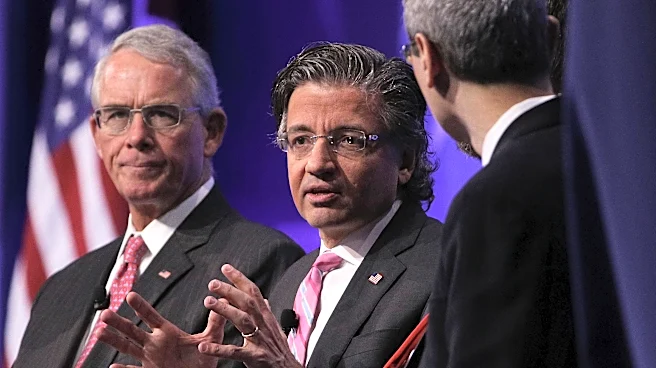
The B20 USA Summit in Washington, D.C., brought together influential business executives and policymakers to discuss opportunities and challenges shaping the global economy. This marks the first time the B20 Summit has been hosted in the United States.
The gathering aims to advance practical solutions, encourage investment, and strengthen conditions for business growth and competition across industries and international markets. Plenary sessions explored various drivers of global economic growth, including investment, energy security, technological innovation, financial markets, and the global business environment. Speakers included U.S. Chamber CEO Suzanne Clark, who emphasized growth as a choice and a responsibility, and Jim Goyer, Deputy Assistant to President Trump and Director of the White House Office of Public Liaison, who outlined the administration's economic agenda.
Why It's Important?
This B20 USA Summit is crucial as it convenes global leaders to tackle pressing economic issues, directly impacting U.S. industries and the broader global economy. The discussions on investment, energy security, and technological innovation are vital for shaping future economic policies and fostering an environment conducive to business expansion. For U.S. businesses, the summit provides a platform to influence international trade policies and investment flows, potentially leading to new market opportunities and enhanced competitiveness. The emphasis on removing policy barriers and promoting private sector growth, as highlighted by U.S. Chamber CEO Suzanne Clark and Jim Goyer, could lead to policy recommendations that benefit American companies and workers by stimulating job creation and economic prosperity. The insights shared by leaders like Carol B. Tomé of UPS on diversifying supply chains and regionalizing operations also offer strategic guidance for businesses navigating evolving global markets.
What's Next?
The B20 USA Summit is expected to culminate in a Leaders' Statement, outlining a practical roadmap for countries to unleash markets and improve lives, focusing on economic growth, innovation, trade, and energy. The recommendations from this summit will likely be presented to the G20 leaders, influencing global economic policy discussions and potential international collaborations. Businesses and policymakers will be looking to implement the suggested solutions, such as modernizing rules-based trade and addressing permitting reform for infrastructure projects. Continued dialogue between industry and government, as advocated by B20 Sherpa Kevin Brady, will be essential to translate these discussions into tangible policy changes that support sustained global economic growth and address challenges like supply chain resilience and energy transition.
Beyond the Headlines
Beyond the immediate policy recommendations, the B20 USA Summit underscores a fundamental shift in global economic dynamics, particularly concerning supply chain diversification and regionalization. Carol B. Tomé's observations about changing manufacturing and sourcing patterns suggest a move away from highly centralized global supply chains, which could have profound implications for international trade agreements and logistics infrastructure. This shift could lead to increased domestic production and regional economic blocs, potentially altering geopolitical alliances and trade relationships. Furthermore, the discussions on AI and trust highlight the ethical and regulatory challenges posed by emerging technologies, emphasizing the need for outcome-based standards developed jointly by industry and government to ensure responsible innovation and prevent fragmented regulatory landscapes that could stifle growth.