



What's Happening?
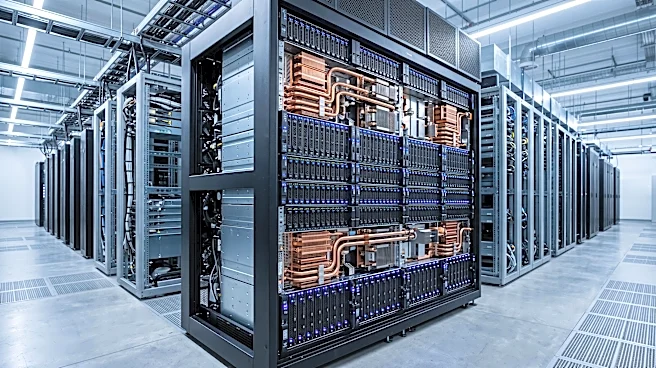
SpaceX is rapidly expanding its AI compute capabilities, with CEO Elon Musk stating the company is currently adding approximately half a gigawatt of AI compute per month, which translates to about 220,000 Nvidia GB300 chips along with associated CPUs,
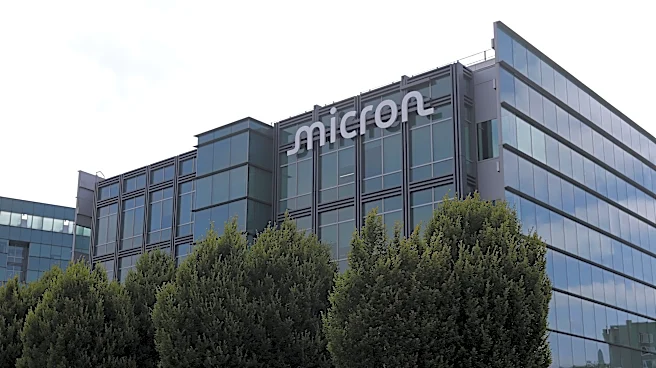
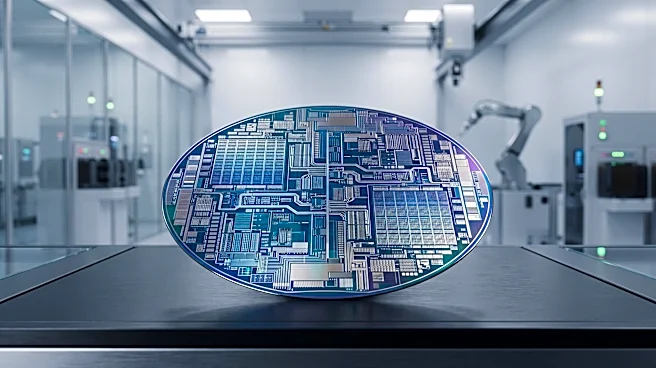
networking, and cooling infrastructure. The company projects to reach one gigawatt of AI compute per month by the end of 2027. This aggressive expansion involves significant capital expenditure, with SpaceX's spending climbing from $4.1 billion in Q1 2025 to $19.6 billion in Q3 2026, and a guided $35 billion to $40 billion for Q4 2026 alone. Apollo Global Management CEO Marc Rowan estimated that building a gigawatt of compute costs roughly $50 billion, with half of that expenditure going to Nvidia. Based on this estimate, SpaceX's 2027 target could mean approximately $300 billion annually directed towards Nvidia from this single customer. Additionally, these GB300 chips utilize high-bandwidth memory (HBM), a product sold by Micron Technology, indicating substantial demand for Micron's offerings as well.
Why It's Important?
This development is highly significant for Nvidia and Micron Technology, as it represents a massive, sustained demand for their core products. For Nvidia, a potential $300 billion annual revenue stream from one customer, SpaceX, would constitute a substantial portion of its projected future sales, with analysts expecting Nvidia's revenue to be $726 billion in fiscal year 2028 and $926 billion in fiscal year 2029. This indicates a strong bull case for Nvidia, especially given its current valuation of 8.7x forward earnings, which is the lowest in five years. For Micron Technology, the increased demand for HBM from SpaceX's AI build-out is expected to keep memory prices high, benefiting its Cloud Memory unit, which saw revenue grow from $4.5 billion to $16.3 billion in the quarter ending September 3. The ability of SpaceX to self-fund a significant portion of this expansion, coupled with substantial debt financing, positions it as a crucial customer for chip manufacturers, potentially altering market dynamics for AI infrastructure providers.
What's Next?
The immediate next step will be observing SpaceX's capital expenditure report for Q4 2026, expected in early 2027. This report will serve as the first major test of whether the company is maintaining its projected spending pace of $35 billion to $40 billion, which would validate the scale of its AI compute build-out. Investors will also be closely watching Micron's December 17 report for insights into the firmness of HBM prices, which are directly influenced by demand from large customers like SpaceX. Furthermore, the continued expansion of SpaceX's AI compute capacity through 2027 will provide ongoing indicators of the growth trajectory for Nvidia and Micron in the burgeoning AI infrastructure market. The financing model, involving significant chip-backed debt, may also set a precedent for other large-scale AI infrastructure projects.
Beyond the Headlines
The aggressive AI compute build-out by SpaceX highlights a broader trend of major technology companies investing heavily in proprietary AI infrastructure, rather than solely relying on traditional cloud providers. This strategy, driven by the immense computational demands of advanced AI models, could lead to a more decentralized AI ecosystem. While SpaceX aims to build its compute at a lower cost (approximately 60% of industry average), the sheer scale of its investment underscores the critical importance of AI capabilities for future technological leadership. This also raises questions about the long-term implications for the semiconductor supply chain, as such concentrated demand from a few large players could influence pricing, innovation, and production priorities for chip manufacturers. The financing mechanisms, such as chip-backed debt, also signal evolving financial strategies to fund capital-intensive AI initiatives, potentially creating new investment opportunities and risks in the financial markets.