










What's Happening?
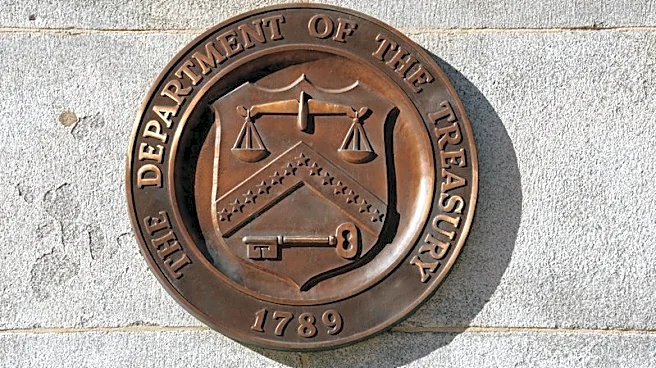
The U.S. Department of the Treasury, under 'Operation Economic Outcast,' has sanctioned an extensive criminal network led by India-based Suniel Kumar Sharma and his wife, Jaspreet Preeti Shahid. This network has been instrumental in supporting Iran's
'shadow fleet' by providing false flags and fraudulent maritime certifications to vessels transporting Iranian petroleum, including those linked to the Iranian military and its proxies. Sharma and Shahid operated from Chandigarh, India, defrauding maritime regulatory administrations across multiple jurisdictions to establish fake flagging authorities and classification societies. Their schemes involved impersonating nations from various continents, including Dominica, Guyana, Eswatini, and Laos, to allow Iranian vessels to evade international sanctions and regulations. The Treasury also sanctioned Türkiye-based Fugo Ground Services Inc for its continued support of Iran's aviation sector, despite previous warnings.
Why It's Important?
This action by the U.S. Treasury is crucial for disrupting Iran's ability to circumvent international sanctions and fund its destabilizing activities. The use of false flags and fake maritime certifications not only enables illicit oil trade but also poses significant risks to maritime safety and the environment, as these vessels often lack valid insurance and adhere to no international standards. The operation highlights the global reach of Iran's sanctions evasion tactics and the complex networks involved. By targeting key facilitators like Sharma and Shahid, the U.S. aims to sever critical economic lifelines for the Iranian regime, impacting its petroleum, petrochemical, and aviation sectors. This move also sends a strong message to other foreign firms and individuals that continue to support sanctioned Iranian entities, emphasizing the U.S. commitment to enforcing its economic sanctions and isolating the Iranian regime.
What's Next?
The U.S. Treasury will continue to implement 'Operation Economic Outcast,' expanding sanctions risk for entities doing business with Iran and accelerating enforcement actions. OFAC is issuing new alerts to the maritime industry, warning of sanctions risks associated with dealing with potentially falsely flagged vessels, reinforcing previous warnings. Further actions are expected against any foreign firm or individual enabling sanctioned Iranian airlines or facilitating money laundering and sanctions evasion for Iran. The goal is to completely sever the remaining economic lifelines of the Iranian regime. This will likely lead to increased scrutiny on global shipping and aviation industries, prompting companies to enhance their due diligence to avoid inadvertently supporting sanctioned entities. The long-term impact aims to significantly cripple Iran's illicit revenue streams and its ability to fund proxy groups and destabilizing activities.
Beyond the Headlines
The intricate web of maritime fraud uncovered by the Treasury Department reveals a sophisticated ecosystem designed to exploit loopholes in international maritime governance. The creation of fake flagging registries and classification societies highlights a systemic vulnerability that extends beyond Iran sanctions, potentially enabling other illicit activities such as illegal fishing, human trafficking, and arms smuggling. This operation underscores the need for enhanced international cooperation and more robust regulatory frameworks to prevent such fraudulent schemes. The ethical implications are significant, as these fraudulent practices undermine global efforts to ensure safety at sea, protect marine environments, and enforce international law. The long-term success of 'Operation Economic Outcast' will depend not only on U.S. enforcement but also on the willingness of other nations to strengthen their maritime oversight and collaborate in dismantling these complex criminal networks.