



What's Happening?
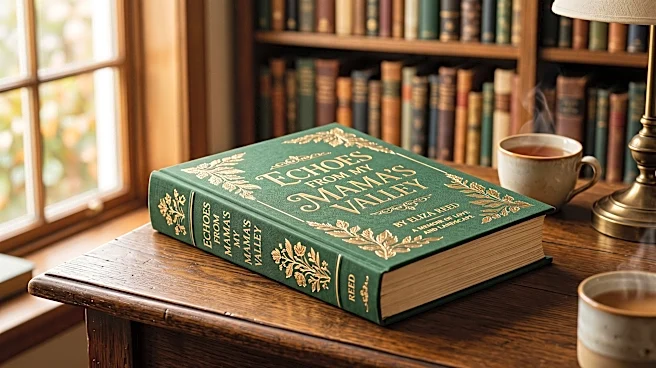
Author Fred E. Epeley is scheduled to introduce his latest book, “Echoes from My Mama’s Valley,” at a signing event. Epeley, a native of Rutherford County and a former teacher at Freedom High School, began his writing career after retiring from teaching
in 1995. His literary works often draw from personal experiences, family histories, and significant events in Western North Carolina. “Echoes from My Mama’s Valley,” published in May 2026, focuses on the life of Dorothy Lou Jean Norman Whisnant, who grew up in the Golden Valley area of Rutherford County, encompassing communities like North Fork, Roper Holler, and Brindletown, where Epeley also spent his childhood. The book aims to explore life in this region approximately a century ago. Epeley’s first book, “Growing Up in Ottie’s World,” was published in 2014. His background includes graduating from Berea College in 1965, earning a master’s degree from Appalachian State University, and studying languages in Europe, achieving proficiency in German, French, and Spanish. His life and career are documented in a collection at Berea College Special Collections and Archives.
Why It's Important?
This event is important as it highlights the continued literary contributions of Fred E. Epeley, whose work preserves and shares the historical and cultural narratives of Western North Carolina. By focusing on local histories and personal experiences, Epeley’s books offer valuable insights into the region’s past, providing a unique perspective on life in rural communities a century ago. Such literary efforts contribute to the cultural heritage of the United States by documenting local histories that might otherwise be overlooked. For readers, it offers an opportunity to connect with the author and gain a deeper understanding of the historical context and personal stories that shaped a specific part of the country. The event also underscores the ongoing relevance of local authors in enriching community culture and historical awareness, particularly in regions with rich, yet often underexplored, histories. His work as an educator and his involvement in the civil rights movement, as documented in his collection, further emphasize the broader societal impact of his life and writings.
What's Next?
Following the book signing, “Echoes from My Mama’s Valley” will likely continue to be available for purchase, potentially reaching a wider audience interested in regional history and personal narratives. Epeley may engage in further promotional activities or discussions about his work, continuing to share the stories and historical context of the Golden Valley area. The documentation of his life and career at Berea College Special Collections and Archives suggests that his contributions will remain a resource for future researchers and historians interested in Appalachian culture, education, and civil rights. The success of this book and previous works may also encourage Epeley to pursue additional literary projects, further enriching the body of literature focused on Western North Carolina’s heritage. Local libraries and historical societies may feature his work, fostering community engagement with regional history.
Beyond the Headlines
Beyond the immediate event, Fred E. Epeley’s work contributes to a broader understanding of American regional identity and the importance of preserving local histories. His focus on the Golden Valley area provides a micro-historical perspective that can illuminate larger societal trends and changes over the past century. The act of documenting personal and community histories, especially from rural areas, helps to counteract the homogenization of cultural narratives and ensures that diverse voices and experiences are recognized. Epeley’s transition from an educator to an author also highlights the enduring power of storytelling and the potential for individuals to contribute significantly to cultural preservation later in life. His proficiency in multiple languages and his experiences abroad, while not directly tied to this book, suggest a broader intellectual curiosity that likely informs his nuanced approach to storytelling and historical interpretation, adding depth to his portrayal of local life.