


What's Happening?
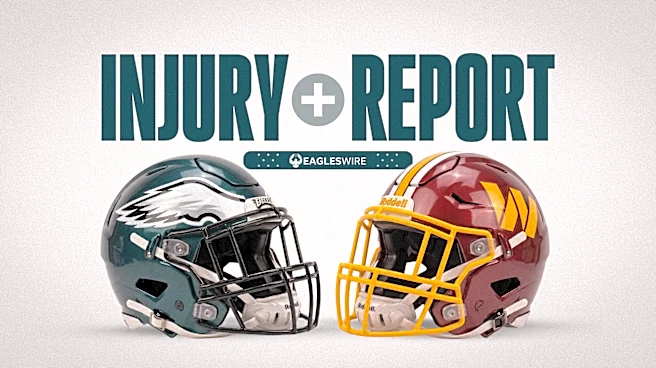
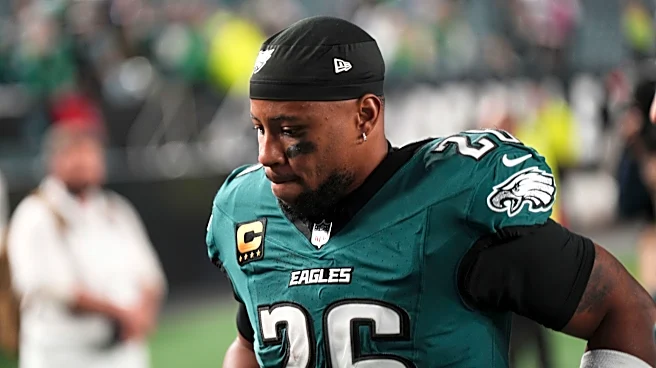
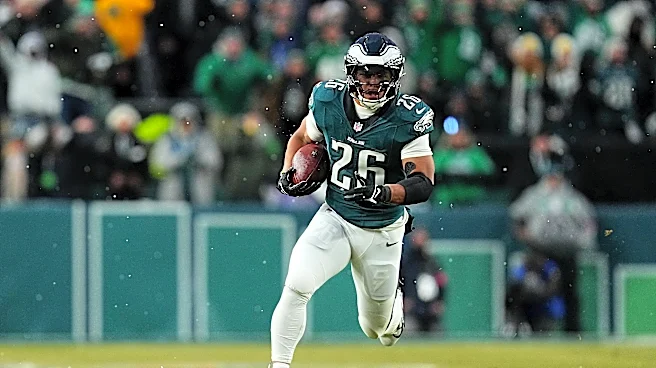
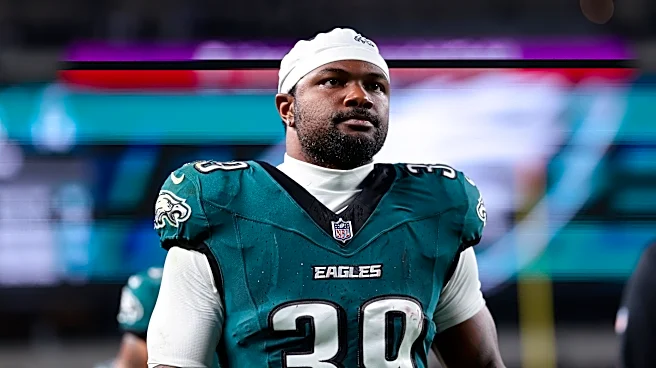
Philadelphia Eagles running back Saquon Barkley is expected to play in the upcoming Sunday night game against the Washington Commanders. This decision comes despite Barkley missing practice on Wednesday and Thursday due to hamstring and back issues. He
returned to practice on Friday as a limited participant, and the Eagles' final injury report listed him without a game status, indicating he is cleared to play. Barkley had previously played through injuries in the Eagles' 38-21 loss to the Cowboys, where he rushed for 62 yards and a touchdown on seven carries and caught two passes for nine yards. While Barkley expressed his desire to play, he acknowledged the need to manage his injuries throughout the game with the Eagles' training staff to prevent further complications. Several other Eagles players, including wide receivers DeVonta Smith and Dontayvion Wicks, have been ruled out for the game due to various injuries.
Why It's Important?
Saquon Barkley's availability is crucial for the Philadelphia Eagles, especially given the team's recent struggles and the absence of other key offensive players. With wide receivers DeVonta Smith and Dontayvion Wicks ruled out, Barkley's role in the offense becomes even more significant. His ability to contribute in both rushing and receiving capacities provides a vital offensive spark. However, playing through existing hamstring and back injuries carries a substantial risk. While his determination to play is commendable, there's a concern that further injury could not only impact the team's performance in the short term but also have long-term consequences for Barkley's career and potential trade value. The decision to play him highlights the team's immediate need for his talent, but it also raises questions about player welfare and the potential for exacerbating injuries in a demanding sport like professional football.
What's Next?
Saquon Barkley will take the field against the Washington Commanders, and his performance will be closely monitored, particularly how he manages his hamstring and back injuries throughout the game. The Eagles' coaching and medical staff will need to carefully manage his workload and monitor his condition to prevent any further setbacks. The team will also need to adapt its offensive strategy given the absence of key wide receivers, potentially relying more heavily on Barkley and other available players. The outcome of this game, and Barkley's health moving forward, could significantly influence the Eagles' trajectory for the remainder of the season. Future injury reports will be critical in assessing his ongoing health and availability for subsequent games.
Beyond the Headlines
The decision to play Saquon Barkley despite his injuries underscores a common dilemma in professional sports: balancing a player's desire to compete with the long-term implications of playing hurt. This situation highlights the immense pressure on athletes to perform, especially in high-stakes games, and the potential conflict between individual player health and team objectives. It also brings to light the role of medical staff in managing player injuries and the ethical considerations involved in clearing players who are not 100% healthy. The long-term impact of such decisions can affect not only a player's career longevity but also the financial investments teams make in their athletes. This scenario serves as a microcosm of the broader discussion surrounding player safety and the intense competitive nature of professional football.