





What's Happening?
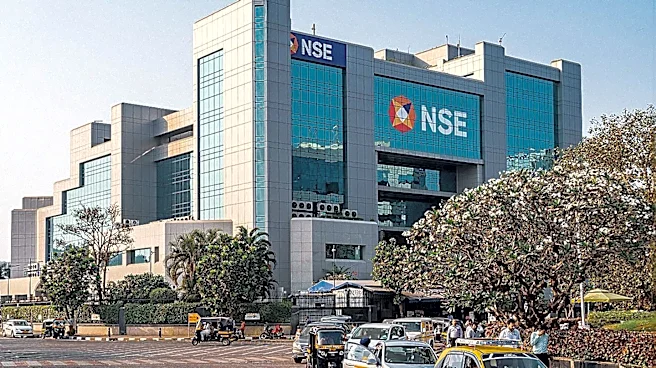
The National Stock Exchange of India (NSE) has secured approval from the Reserve Bank of India (RBI) to introduce futures contracts based on corporate bond indices. This development follows a No Objection Certificate (NOC) from the Securities and Exchange Board
of India (SEBI). The initiative aims to bolster India's fixed-income derivatives market and provide investors with additional tools for risk management. According to Sriram Krishnan, Chief Business Development Officer at NSE, India's corporate bond market has experienced substantial growth, necessitating innovative products to meet evolving investor needs. These new contracts are designed to offer market participants a transparent, standardized, and exchange-traded instrument to manage exposure to fluctuations in corporate bond valuations, including those stemming from interest rate changes and credit spreads. The proposed product is also expected to complement the expanding ecosystem of fixed-income Exchange-Traded Funds (ETFs) and other passive debt investment products in the country.
Why It's Important?
The introduction of corporate bond index futures by the NSE is a significant step towards enhancing the efficiency and depth of India's corporate bond market. By providing a standardized and exchange-traded instrument, these futures will enable better portfolio-level hedging and allow eligible market participants to take directional views on the corporate bond market. This increased flexibility in managing exposure to corporate bond valuations, particularly against interest rate and credit spread changes, is crucial for institutional and retail investors alike. The move is expected to broaden market participation, improve transparency, and foster a more robust fixed-income ecosystem. For U.S. investors with exposure to Indian markets or those considering it, this development signifies a maturing financial infrastructure that could offer more sophisticated hedging and investment strategies, potentially reducing risk and increasing liquidity in their Indian bond portfolios.
What's Next?
Following the RBI's approval, the NSE will now proceed with the necessary operational preparations to launch the corporate bond index futures contracts in adherence to the applicable regulatory framework. The exchange has indicated that specific details regarding contract specifications and the commencement of trading will be announced separately. This suggests a period of internal development and coordination before the products become available to market participants. The successful implementation and adoption of these futures will likely be closely monitored by regulators and market players, as it could pave the way for further innovations in India's fixed-income and derivatives markets. The impact on market liquidity and investor engagement will be key metrics to watch in the coming months.
Beyond the Headlines
The introduction of corporate bond index futures in India reflects a broader global trend towards financial market sophistication and the development of more robust risk management tools. For emerging markets like India, such innovations are critical for attracting foreign investment and integrating more deeply into the global financial system. The ability to hedge against interest rate and credit spread risks more effectively can make Indian corporate bonds more appealing to international investors, potentially leading to increased capital inflows. This development also highlights the growing importance of financial derivatives in managing complex market exposures and fostering greater market stability. It underscores a commitment by Indian financial authorities to modernize their markets and align them with international best practices, which could have long-term implications for India's economic growth and financial resilience.