







What's Happening?
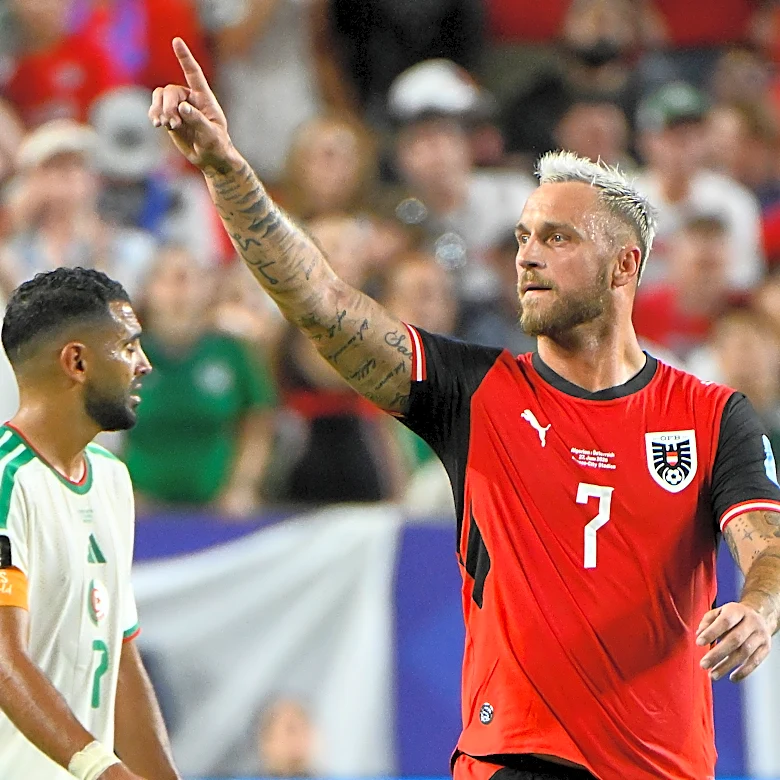
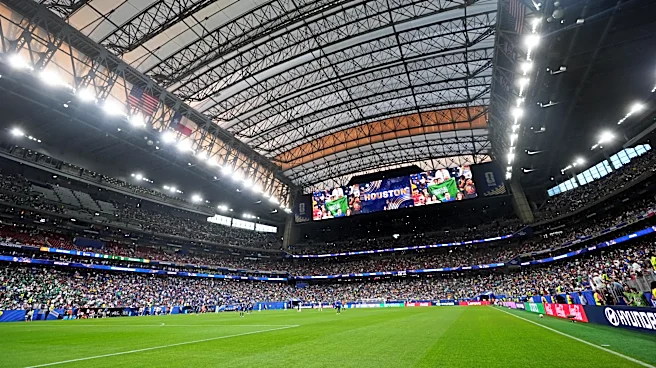
The final game of the World Cup 2026 group stage, held in Kansas City, concluded with a dramatic draw between Algeria and Austria. Both teams needed only a draw to advance to the knockout rounds, eliminating Iran in the process. The match saw Algeria's
Riyad Mahrez score twice, including a late goal that put Algeria ahead 3-2. However, Austria's Michael Gregoritsch managed to keep the ball in play by mere centimeters, assisting Saša Kalajdžić in scoring a last-minute equalizer. This result allowed both Algeria and Austria to progress, while Iran was eliminated due to a previous offside ruling against them. The match exemplified the unpredictable nature of the World Cup, where outcomes can hinge on the smallest margins.
Why It's Important?
The conclusion of the group stage in such a dramatic fashion underscores the intense competition and unpredictability inherent in the World Cup. For Austria and Algeria, advancing to the knockout rounds represents a significant achievement, potentially boosting national pride and interest in soccer within their countries. Conversely, Iran's elimination highlights the fine margins that can determine success or failure in international tournaments. The match also serves as a reminder of the global appeal and emotional investment in the World Cup, as entire nations watch their teams' fates unfold. This event could influence future strategies and preparations for teams aiming to compete on the world stage.
What's Next?
With the group stage concluded, both Austria and Algeria will prepare for their respective knockout round matches. The teams will need to strategize carefully to advance further in the tournament, facing potentially stronger opponents. For Iran, the focus will shift to analyzing their performance and preparing for future competitions. The World Cup will continue to captivate audiences worldwide as the tournament progresses, with fans eagerly anticipating the outcomes of the knockout rounds and the eventual crowning of a champion.