





What's Happening?
The Season 3 finale of HBO's 'House of the Dragon' concluded with significant developments, including the apparent suicide of Helaena Targaryen, who was held captive by her half-sister, Queen Rhaenyra Targaryen. The episode featured a bloody battle at Tumbleton,
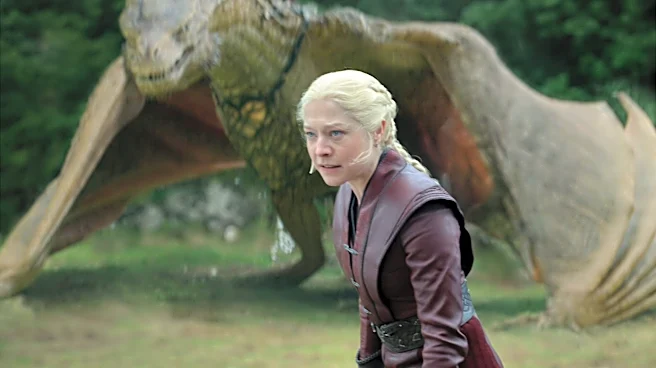
where Daemon Targaryen led an assault against Ormund Hightower's forces. Ormund was killed by Roderick Dustin, who also perished in the fight. The finale left Rhaenyra's rule precarious, as she lost key allies, including her half-sister Helaena and dragon rider Ulf White, who turned traitor. The series, set 200 years before 'Game of Thrones,' follows the Targaryen civil war over the Iron Throne, with Rhaenyra facing challenges from her half-brother Aegon and the newly introduced contender, Daeron Targaryen.
Why It's Important?
The events of the Season 3 finale have significant implications for the power dynamics within the Targaryen family and the broader storyline of 'House of the Dragon.' The loss of Helaena and the betrayal by Ulf White weaken Rhaenyra's position, potentially altering alliances and strategies in the ongoing civil war. The introduction of Daeron Targaryen as a new contender for the throne adds complexity to the succession conflict, which could lead to further battles and shifts in loyalty. These developments are crucial for fans and the narrative, as they set the stage for the series' final season, expected to air in 2028.
What's Next?
With the conclusion of Season 3, 'House of the Dragon' is set to return for its fourth and final season. The unresolved tensions and power struggles among the Targaryens will likely escalate, with Rhaenyra needing to consolidate her power and address the threats posed by Aegon and Daeron. The series' creators have acknowledged the lengthy production process, which includes extensive special effects work for the dragons, contributing to the multi-year gaps between seasons. Fans can anticipate a climactic resolution to the Targaryen civil war in the upcoming season.