





What's Happening?
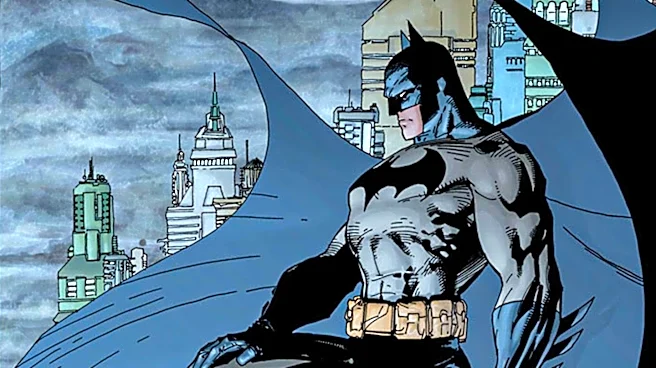
The character of Batman, initially introduced in Detective Comics #27 in 1939, has undergone significant evolution over the decades, with many elements now considered fundamental to his lore not present from his inception. For instance, the iconic Batcave,
Robin, and the Bat-Signal were all later additions. Dick Grayson, as Robin, made his debut in 1940, approximately one year after Batman's first appearance, challenging the perception of Batman as a perpetual loner. Furthermore, the famous scene of Martha Wayne's pearls falling during her murder, a staple in modern adaptations, was introduced much later in Frank Miller's 'The Dark Knight Returns #1' in 1986, nearly 50 years after the character's creation. Early Batman stories also depicted him using machine guns and killing, a stark contrast to his established no-killing rule, which was enforced by editor Whitney Ellsworth. Even Alfred Pennyworth, Batman's loyal butler, initially had a different appearance and comedic role before being redesigned to match actor William Austin's portrayal in the 1943 Batman movie serial. The first vehicle officially named the Batmobile, appearing in Detective Comics #48 in 1941, was notably red and more closely resembled a normal car.
Why It's Important?
The gradual development of Batman's character and his supporting elements highlights the dynamic nature of long-running fictional narratives and their ability to adapt to evolving audience expectations and creative visions. This evolutionary process has allowed the character to remain relevant and engaging for generations, demonstrating how continuous reinterpretation can enrich a fictional universe. The introduction of characters like Robin provided new narrative avenues, allowing for exploration of Batman's mentorship and emotional depth beyond his initial portrayal as a solitary vigilante. The establishment of the no-killing rule, for example, profoundly shaped Batman's moral compass and created a core tension in his crime-fighting methods, distinguishing him from more lethal heroes. The changes in Alfred's character and the Batmobile's design illustrate how external media, such as film, can influence and solidify aspects of a character's comic book identity, creating a feedback loop between different forms of storytelling. This continuous refinement ensures the character's longevity and broad appeal across various media.
What's Next?
The ongoing evolution of Batman suggests that future iterations of the character will likely continue to introduce new elements or reinterpret existing ones to resonate with contemporary audiences. As seen with past changes, new writers and artists will likely explore different facets of Batman's personality, his relationships, and his methods. This could involve new gadgets, allies, or even temporary shifts in his base of operations, similar to his move to a penthouse in downtown Gotham during the Bronze Age. The character's adaptability ensures that he can be placed in diverse scenarios and tackle modern societal issues through his crime-fighting. Future adaptations in comics, films, and television will undoubtedly continue to build upon this rich history, potentially introducing new iconic moments or character traits that become integral to the Batman mythos. The character's ability to change while retaining his core identity is a key factor in his enduring popularity and will likely drive his future development.
Beyond the Headlines
The evolution of Batman's character offers a compelling case study in the collaborative and iterative nature of long-form storytelling. It demonstrates that even foundational elements of a beloved character are often the result of decades of creative input rather than a single, initial master plan. This process reflects a broader cultural phenomenon where popular narratives are continuously shaped by creators and audiences, adapting to changing societal values and artistic trends. The fact that elements like the falling pearls or the no-killing rule were not original but became indispensable highlights how certain narrative choices can profoundly impact a character's legacy and public perception. This continuous re-evaluation and re-imagining allow the character to remain a cultural touchstone, reflecting and influencing societal norms over time. The enduring appeal of Batman lies not just in his initial concept but in his capacity for perpetual reinvention, making him a mirror for the anxieties and aspirations of each generation.