







What's Happening?
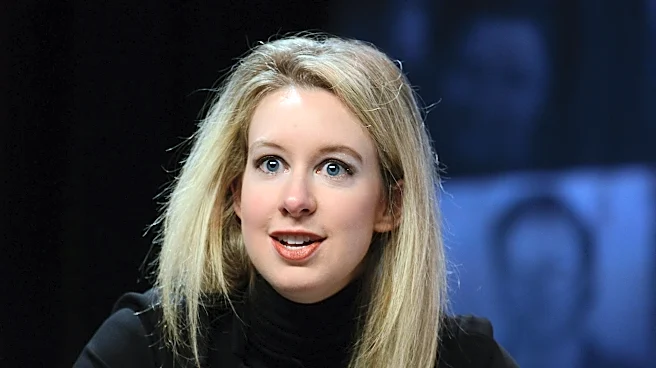
A24 has officially confirmed the release of Nathan Fielder and Lance Oppenheim’s documentary, 'You Can See Everything,' in Australian and New Zealand cinemas. The film, which has garnered significant attention for its unprecedented access to disgraced
Theranos founder Elizabeth Holmes, will be released on November 12th. The documentary follows Holmes in the final weeks leading up to her prison sentence, offering an intimate look into her life during this period. Filming commenced just 34 days before Holmes was scheduled to report to prison, after she agreed to allow Fielder and Oppenheim to document her. The project evolved into what the filmmakers describe as a 'mind-bending three-year journey,' moving beyond a simple behind-the-scenes look at a notorious Silicon Valley figure.
Why It's Important?
This documentary is important because it offers a unique perspective on one of the most high-profile corporate fraud cases in recent U.S. history. Unlike previous dramatizations, 'You Can See Everything' features Elizabeth Holmes herself, providing direct insight into her narrative and state of mind as she faced imprisonment. This access could offer new dimensions to the public's understanding of the Theranos scandal and the individuals involved. The film's release in Australia and New Zealand also highlights the global interest in such U.S.-centric stories, demonstrating how narratives of corporate ambition, failure, and legal consequences resonate internationally. For audiences, it provides an opportunity to engage with a complex story through an unconventional documentary approach.
What's Next?
The release of 'You Can See Everything' on November 12th in Australian and New Zealand cinemas will likely reignite public discussion and media scrutiny surrounding Elizabeth Holmes and the Theranos case. The film's unique access to Holmes in the period before her incarceration is expected to generate considerable debate and analysis regarding her portrayal and the filmmakers' approach. Given the previous public and media fascination with the Theranos story, including the acclaimed Hulu drama 'The Dropout,' this documentary is poised to become a significant cultural talking point. Its reception could also influence future documentary filmmaking, particularly in how filmmakers gain access to and portray controversial public figures facing legal consequences.
Beyond the Headlines
The documentary's focus on Elizabeth Holmes in the lead-up to her prison sentence delves into deeper themes of accountability, public perception, and the human element behind corporate scandals. It raises questions about the nature of truth and narrative in the media age, especially when a subject with a tarnished public image is given a platform. The 'mind-bending' journey described by the filmmakers suggests a complex exploration of character and circumstance, potentially challenging preconceived notions about Holmes. This film could contribute to a broader conversation about the ethics of documentary filmmaking, the power of storytelling in shaping public opinion, and the psychological impact of intense public scrutiny and legal battles on individuals, regardless of their guilt or innocence.